Stop Overbuying for Your First Ironman 70.3. Spend Smart on These Three Things and Save the Rest.
Building your first Ironman 70.3 gear list? Learn exactly what you need for swim, bike, and run, plus where to spend smart and where to save.

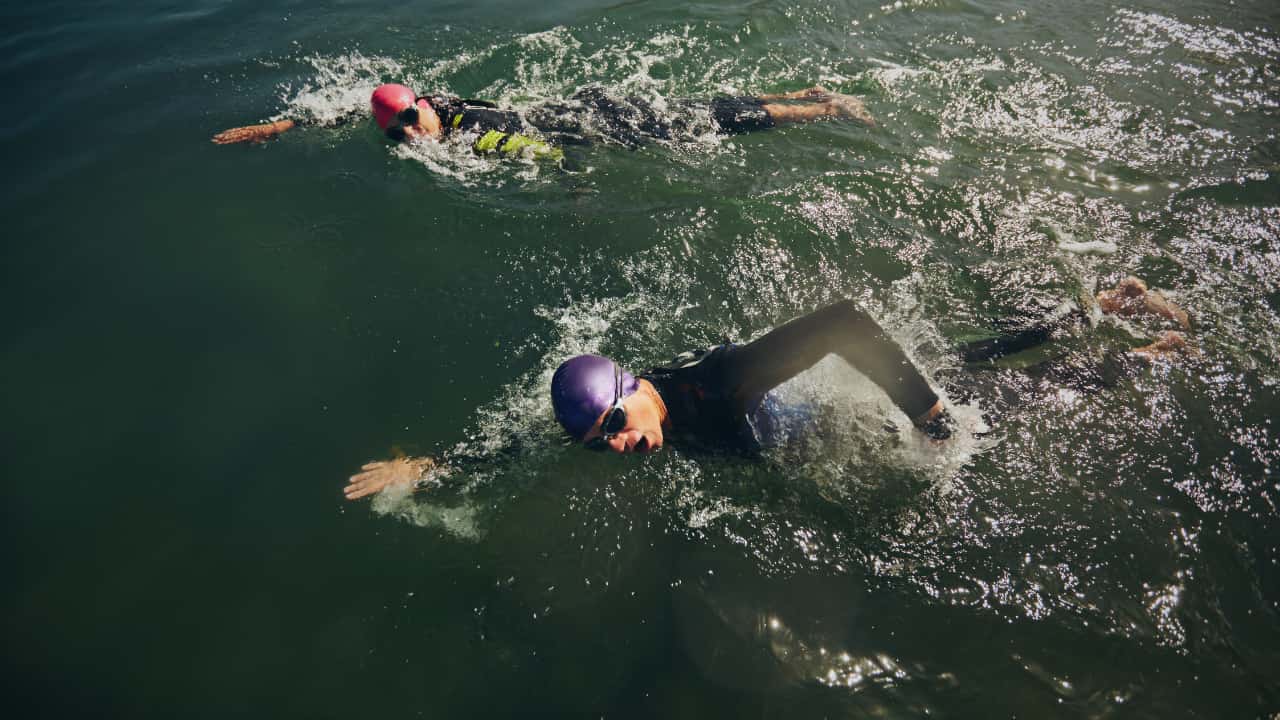
You signed up for your first Ironman 70.3. Now comes the question every new triathlete faces: what do I actually need? The gear list for a half-iron distance race can feel overwhelming, and the price tags even more so. The good news is that you do not need to spend a fortune to cross that finish line. This guide breaks down the essentials by discipline and tells you where your dollars will make the biggest difference.
The Swim Gear Essentials

The swim leg is the shortest but the most gear-specific. Most 70.3 races are wetsuit legal depending on water temperature, and wearing one is strongly recommended for beginners.
Triathlon Wetsuit
A triathlon wetsuit is one of the best investments you can make. It adds buoyancy, improves your body position, and keeps you warmer in open water. Unlike surf wetsuits, tri wetsuits are designed for freedom of movement in your shoulders and arms. Entry-level options from brands like Orca, Zoot, or TYR run between $150 and $300 and will serve a beginner well. This is one category worth spending on.
Swim Goggles
Get a pair of open water goggles with tinted or mirrored lenses. You will likely be swimming toward the sun at some point. A reliable pair from Speedo, TYR, or Aqua Sphere costs $20 to $50. Buy two pairs so you always have a backup on race day.
Swim Cap
The race will provide your official swim cap for wave identification, but practicing with a silicone cap during training is a good habit to build comfort in open water.
The Bike Gear Essentials

The bike leg is the longest part of the race and where the most gear decisions live. It is also where the biggest performance gains and the biggest price tags exist.
The Bike Itself
You do not need a $5,000 triathlon bike to finish your first 70.3. A quality road bike will absolutely get the job done. If you already own one, start there. If you are shopping, a mid-range aluminum or entry-level carbon road bike in the $800 to $1,500 range is a smart starting point. A proper bike fit from a local shop matters far more than the brand name on the frame, so budget for that too.
Cycling Helmet
A helmet is mandatory at every Ironman event, no exceptions. You do not need an aero helmet as a beginner. A well-ventilated road helmet from Bell, Giro, or Specialized in the $60 to $120 range is perfectly appropriate and will keep you safe and comfortable through 56 miles.
Cycling Shoes and Pedals
Clipless pedals and cycling shoes make a measurable difference in pedaling efficiency. If you do not already have them, this is a smart upgrade. Budget around $80 to $150 for entry-level clipless pedals and shoes combined. Practice clipping in and out well before race day.
Nutrition and Hydration Setup
Plan to have two water bottle cages on your bike. You will need calories and hydration over a 56-mile effort. Carry energy gels, chews, or bars in your jersey pocket or a top tube bag. Practice your nutrition strategy during long training rides so your stomach is race-ready.
Flat Kit
Always carry a flat repair kit: two CO2 cartridges or a mini pump, a spare tube, and tire levers. Know how to use them before race day. A flat does not have to end your race if you are prepared.
The Run Gear Essentials

By the time you hit the run, your legs are already tired. The right gear will not save a bad training base, but it can prevent unnecessary suffering.
Running Shoes
Wear the running shoes you have trained in. Race day is not the time to debut a new pair. A well-fitted shoe from Brooks, ASICS, Hoka, New Balance, or On Running that you have logged miles in is what belongs on your feet for those 13.1 miles. Visit a specialty running store for a proper fit if you are overdue for a new pair.
Race Belt
A race number belt is a small but important purchase, usually $10 to $15. It lets you clip your bib on quickly in the transition zone and rotate it from back to front as you move from bike to run. It is far faster and cleaner than pinning a bib to your kit.
Transition and Race Day Gear
The two transition zones, called T1 and T2, are where your swim gear becomes bike gear and your bike gear becomes run gear. A few items make this faster and smoother.
- Triathlon suit or tri kit: A one or two-piece tri suit is designed to be worn for all three legs. You wear it under your wetsuit, bike in it, and run in it. A basic tri suit runs $50 to $150 and eliminates multiple clothing changes.
- Transition bag or towel: Lay out your gear on a small towel in your transition area so everything is organized and easy to grab.
- Body Glide or anti-chafe balm: Apply it on your neck under the wetsuit collar, in your armpits, and anywhere else friction is possible. Chafing over a half-iron distance is brutal.
- Sunscreen: Apply before the race. Reapply at T1 or T2 if possible. A long day outdoors adds up fast.
- Elastic laces: Swapping standard laces for elastic ones on your running shoes means you can slip them on in seconds during T2 without fumbling with knots.
Where to Spend vs. Where to Save
As a beginner, not every gear category deserves equal investment. Here is a simple framework for where to put your money first.
Worth Spending On
- Triathlon wetsuit: Buoyancy and warmth directly affect your swim safety and confidence.
- Bike fit: A proper fit prevents injury and makes 56 miles far more manageable.
- Running shoes: Your feet and joints will thank you across a half marathon on tired legs.
Fine to Save On
- Aero helmet, carbon wheels, and race-day gadgets: These are for experienced athletes chasing time. As a beginner, the limiting factor is your fitness, not your equipment.
- Branded race apparel: A basic tri suit from a lesser-known brand works just as well as a premium one for your first race.
A Few Things First-Timers Often Forget
- Sports watch or GPS device: Knowing your pace and heart rate during training and racing helps you manage effort and avoid blowing up early.
- Bike computer: A simple cycling computer to track speed and distance on the bike is a useful training tool.
- Open water swim practice: The gear only helps if you are comfortable in open water. Get in a lake, bay, or reservoir before race day in your wetsuit and goggles.
- Earplugs for swimming: Optional but helpful if you are prone to swimmer’s ear during open water training.
Final Thoughts
Your first Ironman 70.3 gear does not need to be expensive or complicated. Start with the essentials, invest where it matters most for safety and performance, and save the upgrades for when you know the sport fits your lifestyle. The finish line feeling is the same whether you crossed it on a $1,000 road bike or a $10,000 tri bike. Get the basics right, train consistently, and trust the process.