Hiking Culture Told Her to Blend In. She Brought Sequins Anyway.
A feminine hiker challenges outdoor gatekeeping with pink gear and completed trails, but why does her style provoke backlash men never face?

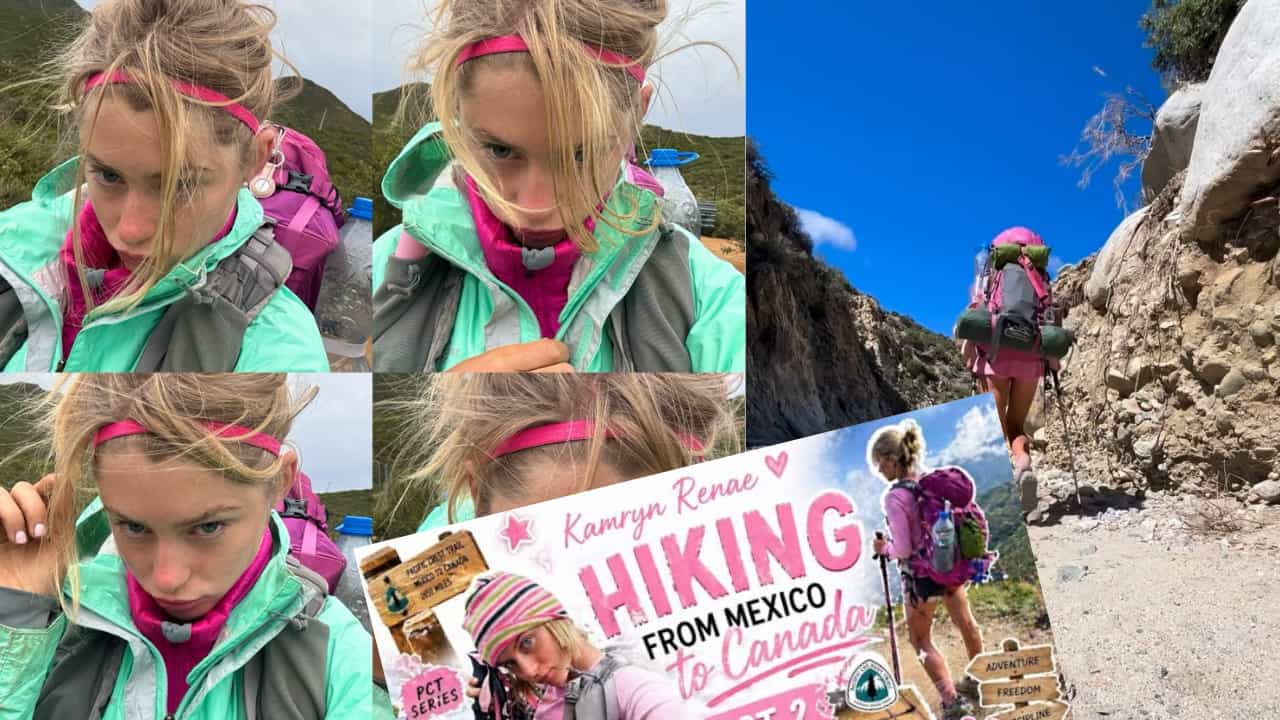
Kamryn Renae’s heart-studded knife and hot-pink gear don’t fit the weathered, utilitarian image most people hold of serious hikers. Yet she’s working to complete the Pacific Crest Trail while building a massive following, proving that femininity and wilderness prowess aren’t mutually exclusive. Her rise challenges deeply rooted gatekeeping in outdoor spaces. But what’s driving the backlash against her style, and why do women adventurers face scrutiny men simply don’t?
From Subaru Living to Trail Fame: The Making of Flamingo
After a year of living out of her Subaru Forester, Kamryn Renae found herself at a crossroads; restless, searching for meaning, and facing a health diagnosis that demanded warmer climates.
A psychedelic experience in Brazil and Cheryl Strayed’s memoir ignited her vision: hiking the Pacific Crest Trail. She chose March 26, her 22nd birthday, as her start date… a symbolic beginning.
The Ohio native, who’d escaped her hometown’s constraints for Bellingham, Washington, brought minimal hiking experience and ultralight gear knowledge to the 2,650-mile journey.
Yet determination drove her forward, transforming a restless dreamer into “Flamingo,” the trail’s most talked-about hiker.
Pink Knives and Gatekeeping: Why Her Style Threatens Hiking Norms
When Kamryn Renae clips a pink heart-studded silver knife to her pack, a practical safety tool wrapped in aesthetic choice, she’s doing more than preparing for trail dangers; she’s challenging a long-standing gatekeeping tradition that equates ruggedness with masculinity in outdoor spaces.
Critics who dismiss her femininity as performative reveal deeper insecurities about women’s capability.
Renae’s refusal to abandon style for credibility forces the hiking community to confront uncomfortable truths: that toughness and beauty aren’t mutually exclusive, and that gatekeeping reflects societal anxieties rather than legitimate concerns about trail safety or authenticity.
How Instagram Made Her a PCT Icon
While Renae’s pink knife symbolizes her refusal to conform to hiking’s masculine aesthetic, it’s her Instagram presence that’s truly redefined what a PCT icon looks like.
Her account is currently projected to reach 600,000 followers by trip’s end. She’s blended flirty content, beauty routines, and candid trail experiences into something genuinely compelling.
Her Instagram exploded with 33,000 new followers in late April, blending flirty content, beauty routines, and authentic trail experiences into something genuinely compelling.
Interview Magazine crowned her “the princess of the PCT,” sparking vital conversations about femininity in outdoor spaces.
Though skeptics questioned her authenticity, Renae kept her phone on airplane mode, prioritizing genuine storytelling over engagement metrics.
She’s proven that adventure doesn’t require abandoning who you are.
Why Women Hikers Face Criticism Men Don’t
The double standards Renae encountered reveal an uncomfortable truth: women in outdoor spaces aren’t just evaluated on their hiking ability. Critics questioned her authenticity, suggesting her femininity and social media presence invalidated her experience.
Male hikers rarely face similar scrutiny about their appearance or content creation. Renae’s pink outfits and beauty routines sparked accusations of performativity, yet these same choices reflect her right to define adventure on her own terms.
The gatekeeping she experienced, concerns that her visibility might somehow endanger future female hikers, exposes societal insecurities about femininity and toughness coexisting. She challenges the notion that capability requires conformity.
What She Actually Accomplished on the Trail
Beyond the criticism and commentary, Renae’s actual performance on the Pacific Crest Trail demonstrated substantial physical and mental fortitude. She completed challenging 25-mile days without ultralight gear proficiency, managing significant distances in spite of her limited hiking background.
Her strategic decision to rest in Tehachapi while awaiting snow melt showed tactical judgment and safety awareness. Renae maintained consistency on the trail while simultaneously building a substantial social media following, 33,000 new followers by late April projected exponential growth.
She balanced content creation with genuine hiking accomplishment, proving that femininity and athletic capability aren’t mutually exclusive. Her sustained performance validated her commitment beyond the aesthetic presentation.
You Can Be Cute and Tough: Her Refusal to Choose
At the heart of the backlash against Renae lies a false choice that society’s imposed for decades: women must select between femininity and competence. She refuses this binary entirely.
Renae hikes rugged terrain in pink outfits, carries a heart-studded knife, and maintains beauty routines, all while completing demanding miles. Her approach challenges the assumption that toughness demands aesthetic sacrifice.
She’s redefining what adventure looks like by proving women needn’t strip away their identity to prove their capability. Strength isn’t diminished by lipstick or sequins; it’s amplified by the courage to be authentically, unapologetically herself.
Her Creator Economy: OnlyFans, YouTube, and What’s Next
Renae’s refusal to accept false choices extends beyond her hiking aesthetic into how she’s built her livelihood. She utilizes YouTube and OnlyFans to fund her adventures while maintaining creative control.
Rather than viewing these platforms as contradictory to her outdoor pursuits, she’s integrated them into a cohesive vision of financial independence. Renae challenges the stigma surrounding content creation, positioning her work as legitimate entrepreneurship.
She’s transparent about monetizing her image while prioritizing authentic storytelling. Looking forward, she’s exploring how to sustain this creator economy model beyond the trail, refusing to compartmentalize her identity or aspirations.
Concluding Thoughts
Kamryn Renae’s journey mirrors a wildflower thriving in concrete, she’s refused to wilt under gatekeeping criticism. Her heart-studded knife doesn’t just symbolize safety; it represents her unwavering commitment to hiking on her own terms. She’s proven that adventure isn’t about conforming to outdated masculine ideals. Instead, she’s carved a trail where femininity and toughness don’t compete… instead they complement each other, inspiring countless women to lace their boots and define strength themselves.