Your Running Shoes Are Sabotaging Your Squats (And Your Training Shoes Are Destroying Your Knees)
Not all athletic shoes are built the same. Learn the key differences between running shoes and training shoes so you can buy smarter, move better, and stay injury-free from day one.

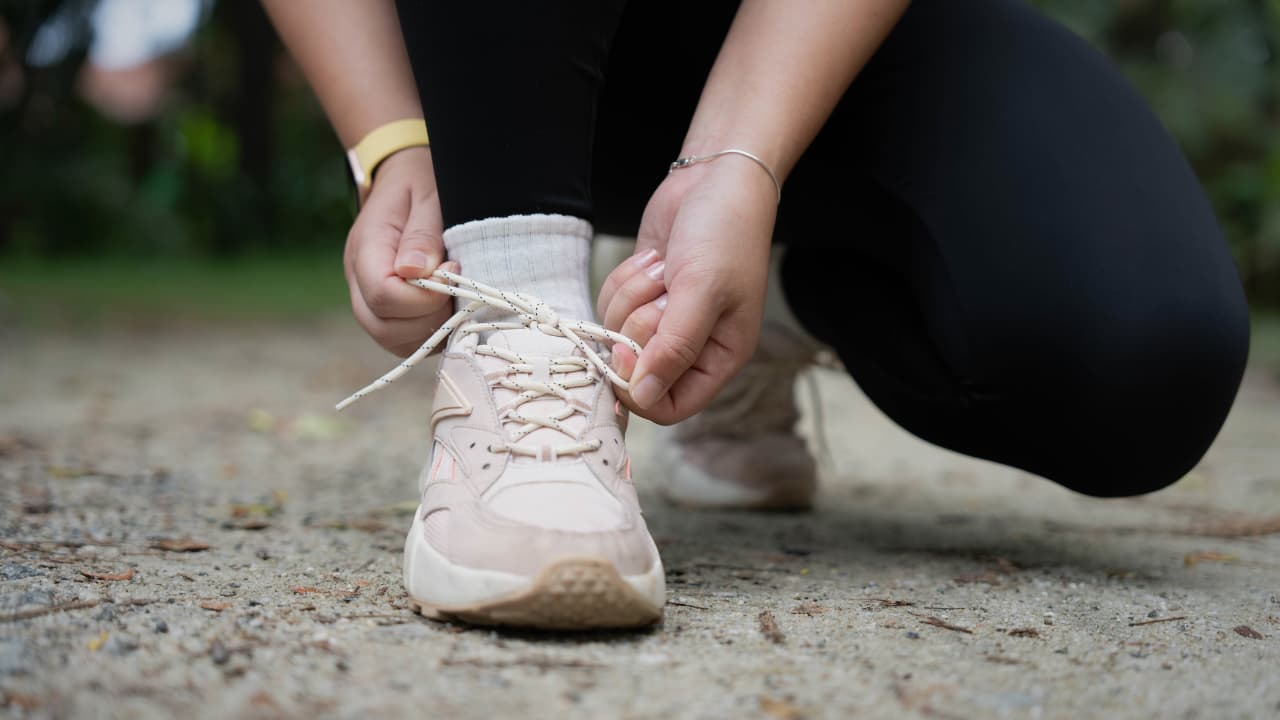
You laced up a pair of sneakers, headed out for a jog, and your feet were screaming by mile one. Sound familiar? Or maybe you wore your running shoes to the gym and felt off-balance during squats. If either of those situations rings a bell, you are not alone, and the fix might be simpler than you think: you may just be wearing the wrong shoe for the job.
Here our goal is to help beginners get started on the right foot (literally). One of the most overlooked fundamentals is understanding that not all athletic shoes are built for the same purpose. Running shoes and training shoes look similar on the rack, but they are engineered for very different movements. Choosing wrong does not just affect comfort, it can affect your performance and even lead to injury.
Let’s break it all down in plain language.
What Are Running Shoes?
Running shoes are designed for one primary movement: forward motion. Whether you are jogging around the block, training for a 5K, 10K, or logging long miles on the trail, a running shoe is purpose-built to support that repetitive heel-to-toe stride pattern, mile after mile.
Here is what makes a running shoe distinct:
- Cushioning: Running shoes, like these ASICS, typically have thick, padded midsoles to absorb the repeated impact of your foot striking the ground. This is critical because with every step, your body absorbs roughly 2 to 3 times your body weight in force.
- Heel drop: Most running shoes have a noticeable height difference between the heel and the toe (called heel-to-toe drop). This is designed to support the natural heel-strike gait most runners use.
- Lightweight and flexible: Running shoes are built to flex forward naturally with your foot, making each stride feel effortless over time.
- Less lateral support: Because running is almost entirely a straight-line activity, running shoes are not reinforced for side-to-side movement.
Best used for: Road running, trail running, jogging, 5Ks, half marathons, marathons, and any long-distance cardio done primarily in a straight line.
What Are Training Shoes?
Training shoes are built for variety. They are the multi-tool of athletic footwear, designed to handle the unpredictable, multi-directional demands of gym workouts, fitness classes, and cross-training activities.
Here is what sets a training shoe apart:
- Lateral stability: Training shoes have reinforced sides to support quick cuts, lateral shuffles, and side-to-side movements without rolling your ankle.
- Flatter sole: Most training shoes have a lower, flatter profile. This gives you a more stable base for weightlifting, lunges, squats, and other ground-based exercises where you want to feel connected to the floor.
- Durability in the forefoot: Because training involves lots of pivoting and stopping, the forefoot area is reinforced to handle that wear.
- Less cushioning than running shoes: That thick cushioning that protects runners actually works against you in the weight room. Too much cushion makes you unstable under load.
Best used for: Strength training, HIIT, boot camps, aerobics, cycling classes, yoga, agility drills, and gym workouts that mix multiple types of movement.
Why Wearing the Wrong Shoe Actually Matters

This is the part beginners most often skip, so pay close attention.
Wearing a running shoe in the weight room can actually put you at risk. That thick, cushy midsole that feels great on pavement becomes a problem when you are squatting heavy. Your foot has no stable foundation, which shifts stress up the chain into your knees, hips, and lower back. Over time, this adds up.
On the flip side, wearing training shoes for a long run means your foot is not getting the cushioning it needs to absorb thousands of impact repetitions. Shin splints, plantar fasciitis, and knee pain are common results of logging miles in the wrong footwear.
The bottom line: performance shoes are purpose-built tools. Using the right one for the right job protects your body and helps you perform better.
Quick Comparison: Running Shoes vs Training Shoes
| Feature | Running Shoes | Training Shoes |
|---|---|---|
| Primary Motion | Forward (linear) | Multi-directional |
| Cushioning | High (impact absorption) | Moderate (stability focused) |
| Heel Drop | Higher (8mm to 12mm typical) | Lower (0mm to 6mm typical) |
| Lateral Support | Minimal | Reinforced |
| Sole Flexibility | Flexes forward | Stiffer, more stable |
| Best For | Running, jogging, cardio | Gym, HIIT, lifting, classes |
So, Do You Need Both?
Ideally, yes. If your fitness routine includes both running and gym or cross-training workouts, having a dedicated pair for each activity is the smartest long-term investment you can make in your body. Athletic shoes are not just accessories; they are gear, and gear matters.
That said, if budget is a concern right now, prioritize based on what you do most. If 80% of your activity is running, start with a solid running shoe. If you are mostly in the gym with only short warm-up runs on a treadmill, a good training shoe can handle that workload.
One practical tip: rotate your shoes if you can. Alternating between pairs extends the life of each shoe and gives the cushioning materials time to decompress between sessions.
Tips for Buying Your First Pair
- Go to a specialty running store. Staff at dedicated running or athletic stores can analyze your gait, check your arch type, and match you to the right shoe. This is free at most locations and worth every minute.
- Know your foot type. Flat feet, high arches, and neutral arches all benefit from different levels of support. When in doubt, ask a professional.
- Shop at the end of the day. Your feet naturally swell throughout the day. Shopping in the evening gives you a truer fit.
- Do not buy based on looks alone. We know, the colorways are tempting. But fit, function, and feel should always come first.
- Replace running shoes every 300 to 500 miles. The cushioning breaks down long before the upper shows visible wear. A worn-out midsole is a common and preventable cause of running injuries.
The Takeaway
The world of athletic footwear is not one-size-fits-all. Running shoes and training shoes serve very different purposes, and knowing the difference is one of the simplest, most impactful things you can do as a beginner to protect your body and improve your results.
Start with the activity you love most, invest in the right shoe for it, and build from there. Your future self (and your feet) will thank you.
Got questions about gear, training, or getting started? Browse more beginner guides right here at EarnedMiles and take the guesswork out of your next adventure.