The Real Reason to Use Hiking Poles and Beginners Almost Always Miss It
Beginners buy trekking poles to avoid falling. The real payoff is load your knees and quads never carry alone. Here is what nobody tells you first.

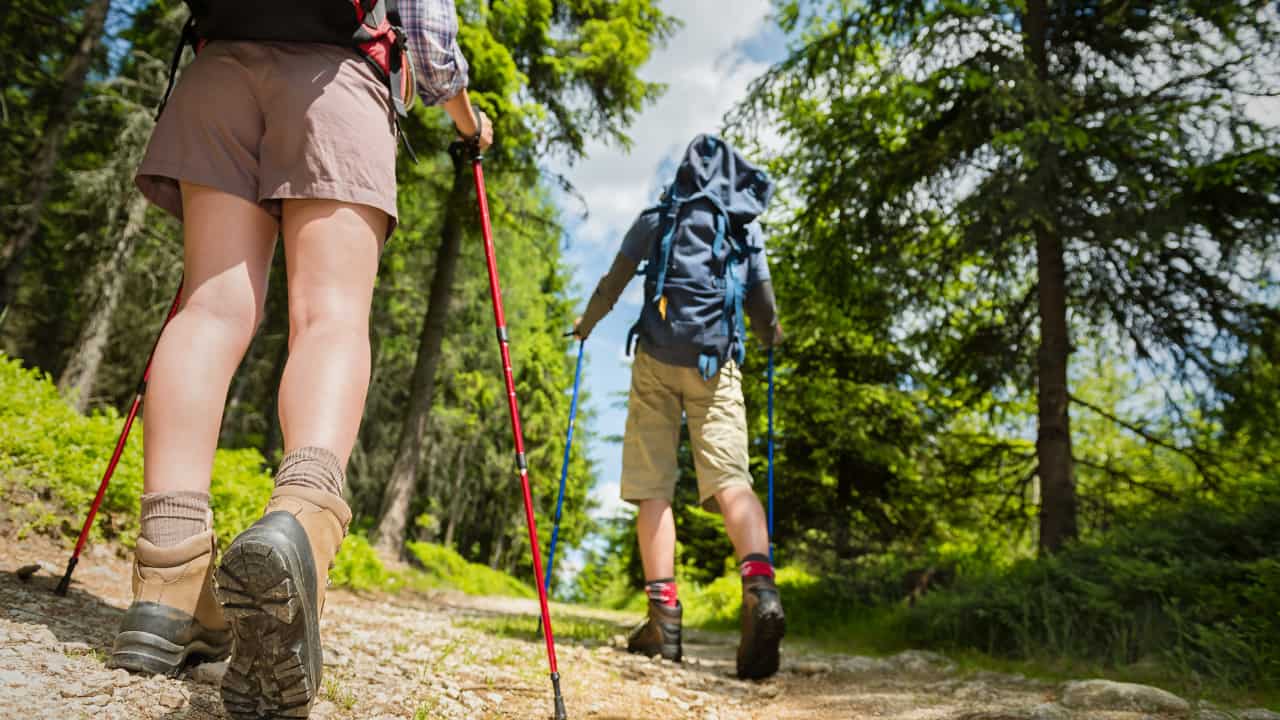
You buy your first pair of trekking poles for one reason. You do not want to fall.
The picture in your head is a wet root, a slip, and a pole shooting out to catch you like a stunt double. That picture is why most beginners pick up poles, and it is also the least interesting reason to carry them. Balance is the sales pitch. It is not the payoff.
The real reason poles help lives somewhere you cannot see from the trailhead. It shows up at mile eight, on the drive home, and on the second morning of a backpacking trip when your legs are supposed to be trashed and somehow are not. Let me walk you through what actually changes, because nobody explains this part before you spend the money.
Balance is the reason everyone assumes, and the weakest one
Here is the uncomfortable truth about the catch-yourself fantasy. When you are genuinely falling, a planted pole rarely saves you. You are already committed, gravity has already won, and a fixed pole under a moving body is a good way to wrench a wrist or bend an expensive piece of aluminum.
Poles do add two contact points, and on the right terrain that matters a lot. But leaning on them for everyday balance can quietly work against you. Your core and the small stabilizing muscles in your ankles and hips learn balance by being asked to balance. Hand a beginner four points of contact on flat, easy trail and those muscles get to clock out. You feel steadier that day and build less of the thing that keeps you upright on every day after.
So if balance is the only reason you are reaching for poles, hold on. The better reason is bigger, and it is about your legs, not your feet.
The real reason is load, spread across miles
Every step you take downhill, your quads and knees work as brakes. They absorb your body weight plus your pack, over and over, thousands of times in a single descent. On flat ground it is gentle. Pointed downhill it is a pounding, and it is the reason your legs feel wrecked at the bottom long before your lungs do. If you have ever wondered why your knees seem to prefer dirt to pavement, this braking load is a big part of the story.
Poles let your arms take a slice of that braking force on every single step. Plant, load, push, repeat. On any one step the help is almost too small to notice. That is exactly the point. It is not the moment, it is the math. Multiply a tiny saving by ten thousand steps and you get real legs left in the tank when it counts.
You will see a stat float around that poles take twenty five percent of the strain off your knees. Be a little skeptical of that clean number. Real world results are messier, and some studies find far less difference. What is not in dispute is the mechanism: on descents, your arms can share the load your knees would otherwise eat alone. You do not feel that as a dramatic rescue. You feel it as fresher legs at the car.
Where poles actually earn their keep
Poles are a tool, and tools are for specific jobs. These are the moments a beginner will be glad to have them along.
- Long or steep descents, where your knees and quads are doing all the braking and your arms can finally help. Learning to move downhill well matters just as much, and it pairs with poles rather than replacing them.
- Loose, steep ground, up or down, where a solid plant keeps you from sliding onto your backside.
- Stream crossings, where two extra points of contact on slick rock turn a sketchy step into a manageable one, and you can probe the depth before you commit a foot.
- Snow, mud, and shoulder season slush, where more contact points mean fewer surprise slips.
- A heavy pack over uneven terrain, where poles steady your whole upper body instead of letting a loaded torso whip you around.
That last point is why poles and backpacking go together so well. Add fifteen or twenty five pounds to your back and every effect above gets louder. The braking on descents is heavier, the balance on a rooty traverse is trickier, and the day runs longer. Poles quietly pay that tax down all day, which is a real gift on multi day hiking and backpacking efforts.
There is a bonus for backpackers, too. Many ultralight tarp and trekking pole shelters pitch using your poles as the tent structure. One piece of gear doing two jobs is real weight saved, and weight saved is a language backpackers speak fluently.
The honest downsides, because they are real
A friend who has been out there owes you the other side of this.
Your hands are occupied. That sounds minor until you want your phone for a photo, a snack out of your hip belt, or both hands free for a rocky scramble. You can let poles dangle from the straps, but it is clunky, and on easy trail you may find yourself carrying sticks you are not really using.
They can also become a crutch. Grab them for every flat, boring mile and you train yourself to need them while your natural balance goes soft. And they are one more thing to buy, adjust, and keep track of. None of this cancels the benefits. It just means poles are a tool for the terrain, not a crutch for the whole trail.
How a beginner should actually start
If you are new, do not overthink the purchase. Get an adjustable pair rather than fixed folding poles, so you can dial them in while you learn what you like. Set the length so your elbow sits at a right angle when the tip is on the ground, then shorten them a touch for climbs and lengthen them for long descents.
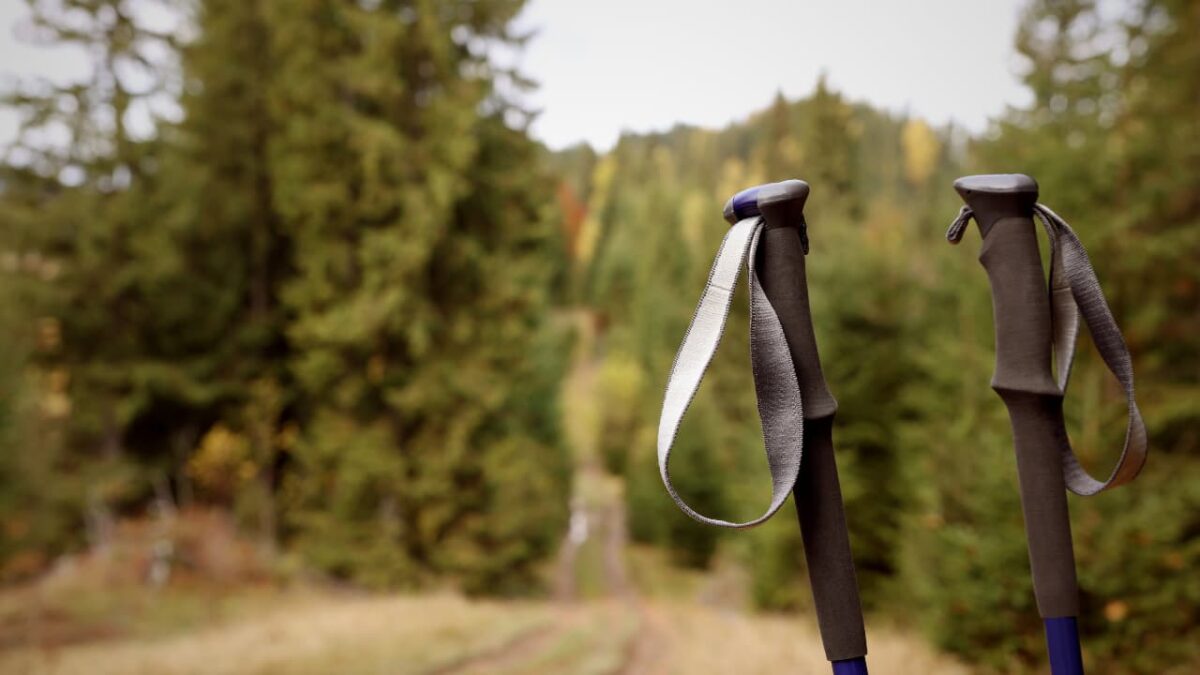
Two quick things nobody tells first timers. Put your hand up through the strap from underneath, not down from the top, so the strap carries the load and your grip can stay relaxed. And on real trail, pull the rubber tip covers off and let the hard tips bite the dirt, since those rubber caps are meant for pavement and storage.
Then use them the way the terrain asks. Pack them for the day with the known stream crossing or the big descent. Leave them home for the flat, easy loop where your own two feet are the whole point. Poles are not a badge and not a beginner label. They are one more way to keep more of yourself intact across the miles, so the trail gives you strength instead of only taking it.
Whatever your next mile looks like, earn it.