The "2 Liters a Day" Rule Has No Idea How Hot It Is or How High You're GoingCarry a method, not a number.
How-To & Guides

Hiking is the practice of walking on natural terrain for recreation, fitness, and the experience of being in wild or semi-wild places. It is one of the most widely practiced outdoor activities in the world, requiring no athletic background, no special skills, and very little equipment to begin. From a gentle loop through a local forest to a demanding multi-day traverse of a mountain range, hiking scales to meet you wherever you are and rewards you at every level with physical benefit, mental clarity, and access to landscapes that roads and buildings cannot reach.
Benefits: Grounds the mind while strengthening the body
Expected Startup Costs: $150 to $1,500 per year (boots + gear + travel + permits)
Hiking is purposeful walking on natural surfaces including dirt trails, forest paths, rocky mountain terrain, coastal headlands, desert canyons, and everything in between. It differs from casual walking primarily in the intention and terrain involved. A hike typically takes place on a designated trail or route in a natural environment, involves meaningful elevation change or distance, and requires at least basic preparation in terms of footwear, water, and navigation. Beyond those loose parameters, the definition is intentionally broad and the activity is intentionally inclusive.
Day hiking, the most common form, involves setting out from a trailhead or access point, covering a route of any distance, and returning to your starting point within a single day. Day hikes range from a thirty-minute flat loop on a well-marked park path to a twelve-hour alpine summit attempt covering twenty-five kilometers and two thousand meters of vertical gain. Both are day hikes in the technical sense, and the enormous range of difficulty within that single category is one of the things that makes hiking uniquely scalable as a physical practice.
Beyond day hiking, the discipline extends into multi-day hiking on hut-to-hut routes where accommodation is provided at intervals, point-to-point trail hikes requiring transport logistics, and the long-distance thru-hiking tradition where iconic trails like the Appalachian Trail, the Pacific Crest Trail, and the Te Araroa in New Zealand are walked in their entirety over weeks or months. These longer formats carry their own culture, community, and demands, but they grow from the same root as the simplest day walk in a local park.
Hiking also encompasses a rich tradition of peak bagging, which is the goal-oriented pursuit of summiting specific mountains or completing defined lists of summits such as the Munros in Scotland, the Colorado Fourteeners, or the Adirondack 46ers. Peak bagging gives hiking a structured progression and a community of like-minded participants that transforms individual hikes into chapters of a longer, more purposeful project that can span years or decades of regular outings.
The starting point is as simple as any in this series. Find a trail near you, put on a pair of supportive shoes, bring water, and go for a walk. The first hike does not need to be long, demanding, or in spectacular scenery. A one-hour loop in a local park or nature reserve is a completely legitimate and valuable first hike, and what matters is not how far you go but that you develop the habit of going regularly. Many people discover through their first few hikes that trails exist near them that they were entirely unaware of, and this revelation of hidden local nature is one of the most common and most delightful early experiences of taking up hiking.
Resources for finding local trails are widely available and largely free. Apps like AllTrails, Komoot, and Gaia GPS provide searchable databases of trails with user reviews, photos, difficulty ratings, elevation profiles, and downloadable offline maps. Most national and regional parks publish trail maps and route descriptions on their websites. Local hiking clubs often organize group walks for all ability levels and are an excellent source of local knowledge about which trails are best suited to beginners in any given region.
When you are ready to attempt longer or more demanding hikes, begin researching the specific demands of each route before you go rather than discovering them on trail. Understanding a route’s distance, elevation gain, exposure, water availability, and required navigation level before you commit to it allows you to prepare appropriately and make informed decisions about whether a given hike matches your current fitness and equipment. Underestimating a demanding hike and finding yourself underprepared on exposed terrain without enough water or daylight is one of the most common ways that otherwise enjoyable hikes become difficult or dangerous situations.
The ten essentials framework, a classic backcountry preparedness checklist developed by the mountaineering community, provides a useful guide for what to carry on any hike beyond a short, well-marked loop close to civilization. It covers navigation tools, sun protection, insulation, illumination, first aid, fire starting, repair tools and knife, nutrition, hydration, and emergency shelter. Not every item is necessary on every hike, but understanding the framework and making deliberate decisions about which elements apply to each outing builds sound preparation habits that prevent avoidable emergencies.
How-To & Guides
Mindset & Motivation
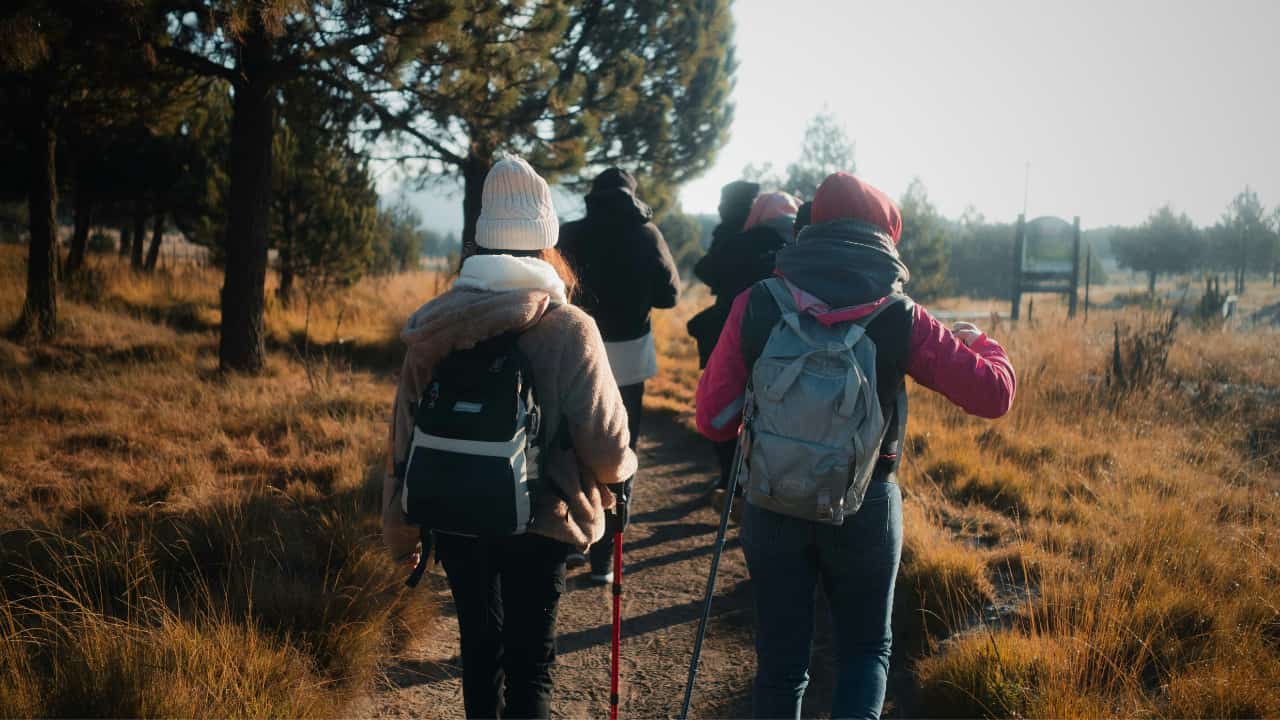
Month 1: The first month is about building the habit and discovering what hiking means to you personally. Aim for one to two hikes per week on routes that are comfortable rather than challenging, focusing on enjoying the experience rather than covering distance or gaining elevation. Your body will begin adapting to the specific demands of hiking on natural terrain, including the ankle stability required on uneven surfaces, the quad and glute load of climbing and descending, and the sustained aerobic effort of longer outings. These adaptations come quickly with regular practice and feel notably different from the fitness developed by gym training or road walking.
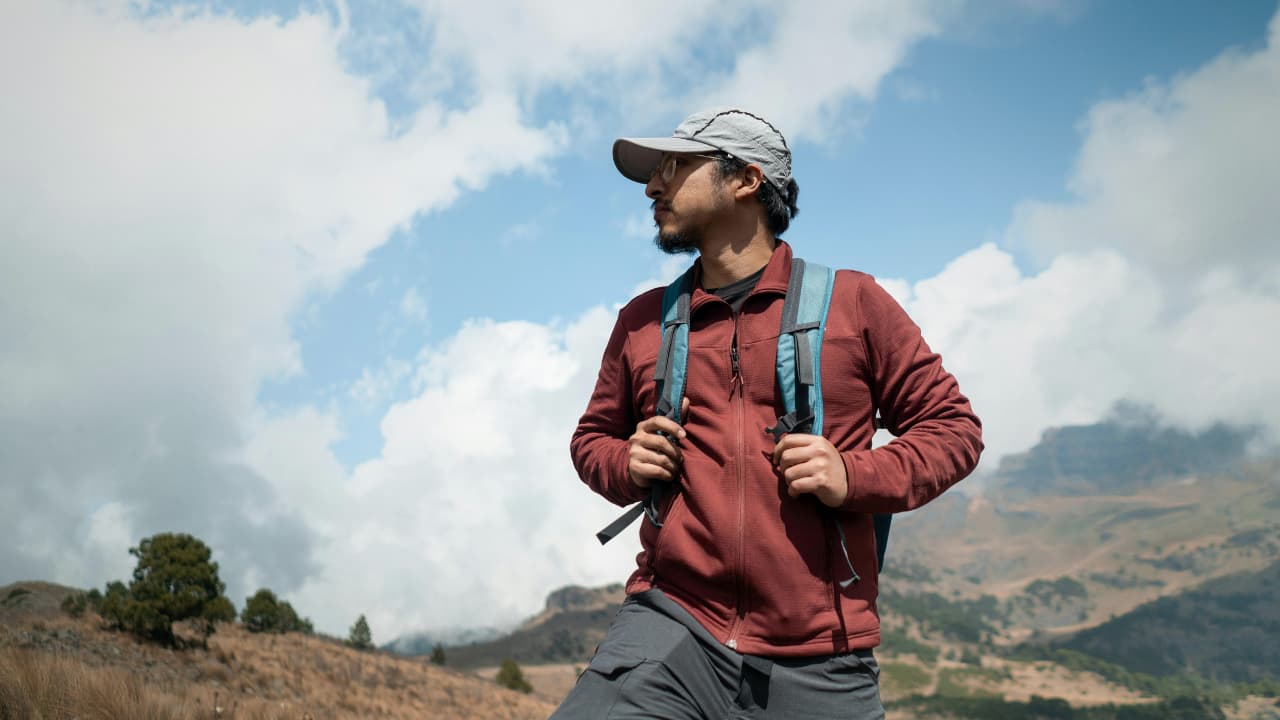
Use this month to identify the type of hiking that appeals most to you. Some people discover a strong preference for dense forest trails with close, intimate scenery. Others are drawn to open ridgelines with expansive views. Some find long flat routes meditative and restorative. Others want the physical challenge of steep terrain and summit goals. Understanding your own preferences early allows you to seek out the specific kinds of trails that will sustain your motivation and enjoyment over the long term rather than hiking generically and losing interest.
Month 2: Begin extending your hikes progressively in either distance or elevation, but not both at the same time. If your first month established comfortable day hikes of eight to ten kilometers, begin working toward twelve to fifteen. If your routes have been predominantly flat, begin seeking out trails with meaningful elevation gain. The physical demand of sustained climbing on natural terrain is qualitatively different from flat walking and produces leg fatigue and cardiovascular demand that flat routes do not develop, and building these capacities opens up a significantly wider range of future hiking objectives.
Begin paying more attention to your footwear, hydration, and nutrition on longer hikes. Drinking before you feel thirsty, eating small amounts of food every ninety minutes to two hours on hikes of four or more hours, and ensuring your boots or trail shoes are both appropriate for the terrain and completely broken in before a long outing are practical habits that separate comfortable, enjoyable long hikes from painful or exhausting ones. Many hikers discover the importance of these details through a single unpleasant experience that could have been avoided with modest preparation.
Month 3: You are developing real hiking competence and your body has adapted meaningfully to the demands of regular trail walking. Hikes that would have felt ambitious in week one are now comfortable, and you have a clearer sense of what you are capable of and what your next challenges should be. This is a natural point to set a more ambitious goal for the coming months, whether a particular summit, a multi-day route, a challenging long day hike, or entry into a hiking challenge or peak bagging project that gives your practice direction and long-term momentum.
Consider joining a local hiking club or signing up for a guided hike on terrain slightly beyond your current comfort level. Hiking with more experienced walkers exposes you to route-finding skills, navigation habits, pacing discipline, and preparedness practices that accelerate your development significantly compared to solo hiking on familiar terrain. Most hiking clubs are welcoming to people at all levels and provide a community around the activity that many participants find as valuable as the hiking itself.

How-To & Guides

How-To & Guides

Hiking boots or trail shoes ($80 to $250): The most important purchase in hiking and the one most worth getting right. The choice between a full hiking boot and a trail running shoe depends on the terrain you hike most often and your own preference for ankle support and waterproofing. Full leather or synthetic hiking boots with ankle support and a waterproof membrane are appropriate for rough mountain terrain, wet conditions, and heavy pack carrying. Lighter trail running shoes or low-cut hiking shoes suit fast-paced day hiking on well-maintained trails in drier conditions and are preferred by many experienced hikers for their comfort and packability. Whatever you choose, fit is everything. Buy from a retailer who allows you to try boots on with the socks you plan to hike in and break them in thoroughly on short local walks before taking them on a long or demanding route.
Daypack ($50 to $150): A daypack of twenty to thirty liters capacity carries everything needed for a full day hike including water, food, extra layers, a first aid kit, navigation tools, and emergency supplies. The pack should fit your torso length, sit comfortably on your hips rather than hanging from your shoulders alone, and have enough organizational pockets to keep frequently accessed items reachable without unpacking the entire bag. Hip belt pockets for snacks and a phone, a dedicated hydration sleeve or external bottle pockets, and a rain cover are features worth prioritizing. Osprey, Deuter, and Gregory make widely respected daypacks across a range of price points.
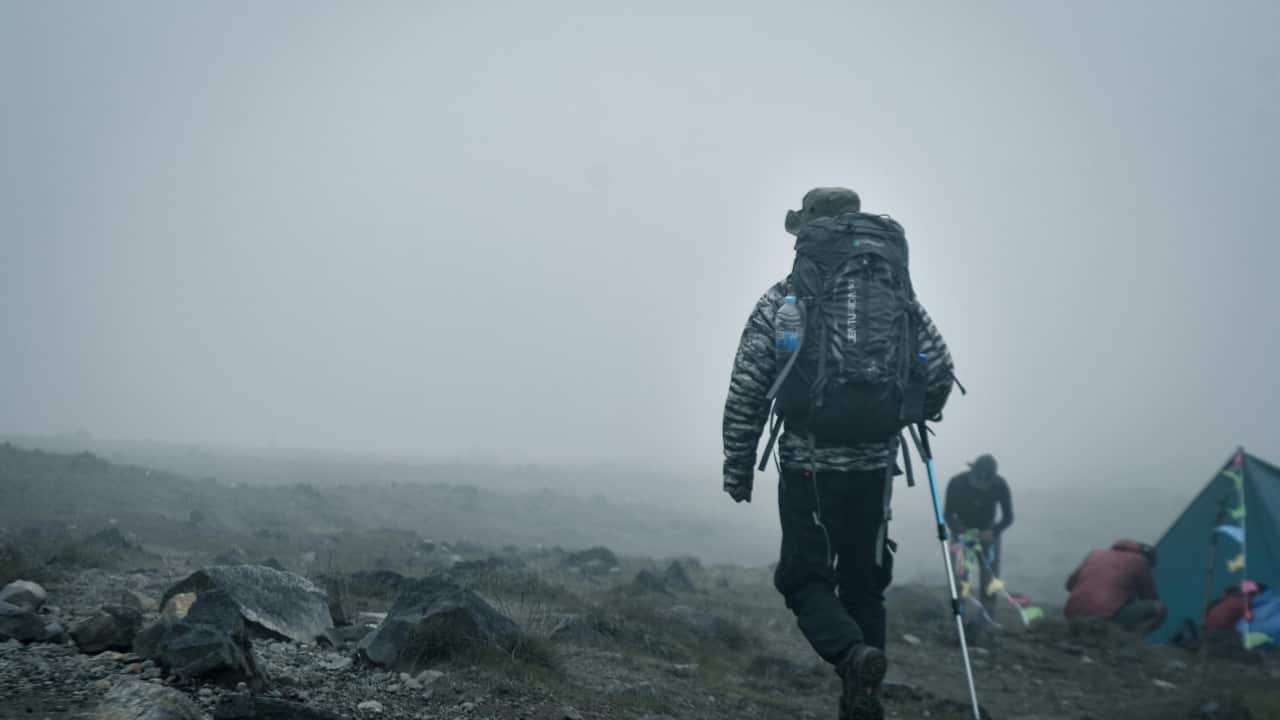
Moisture-wicking base layer and insulating layer ($40 to $150): The layering system is the foundation of comfortable hiking in variable conditions. A moisture-wicking base layer in synthetic or merino wool moves sweat away from your skin during exertion and keeps you warmer than cotton when wet. A mid-layer of fleece or light down provides insulation during rest stops, on exposed ridgelines, and in cooler conditions. A waterproof and windproof outer shell completes the system for unpredictable weather. Mountain weather changes rapidly and carrying the capacity to add warmth and protection weighs very little relative to the comfort and safety it provides.
Navigation tools ($0 to $80): A downloaded offline map on your smartphone via AllTrails or Gaia GPS is adequate navigation for most day hiking on well-marked trails. A paper map and compass as backup is strongly recommended for any hiking in terrain where trails are less clearly marked or where going off route carries meaningful consequence. Learning to read a topographic map and use a compass is a foundational outdoor skill that takes a few hours to learn and provides lifelong value across all terrain-based outdoor activities.
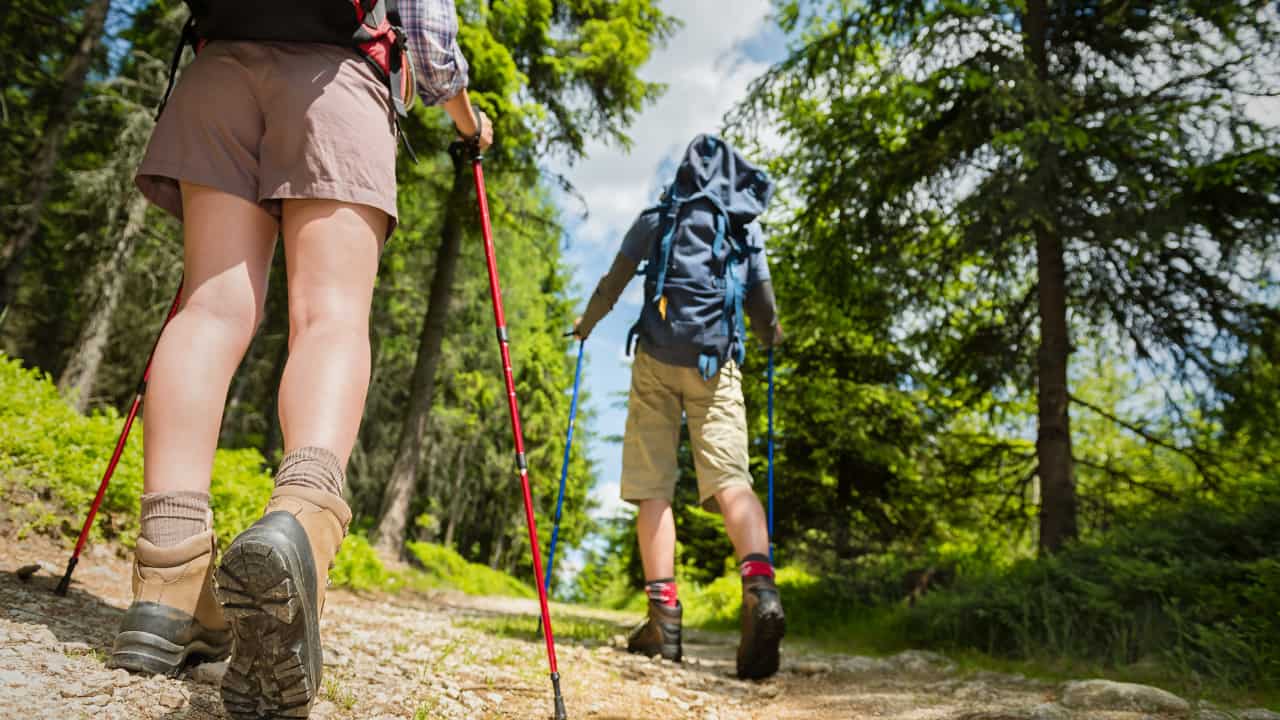
Trekking poles, optional ($40 to $180): Collapsible trekking poles significantly reduce the load on knees during long descents, improve balance on technical terrain, provide stability on stream crossings, and add an upper body workout component to hiking that increases calorie burn measurably. They are particularly valuable for people with existing knee issues, on routes with significant elevation loss, and on multi-day hikes where cumulative joint stress accumulates over consecutive days. Many hikers resist poles initially and become consistent users after experiencing their first long descent without them.
Hydration system ($10 to $50): Carrying sufficient water is a safety essential on any hike beyond a short loop close to an access point. A two-liter hydration bladder that sits inside your pack and feeds a drinking tube to your mouth allows continuous sipping without stopping to reach for a bottle, which promotes consistent hydration better than bottles alone. Water bottles are lighter, simpler to clean, and easier to monitor for remaining volume. Many hikers use one of each, with a bladder for drinking during the hike and a bottle for longer breaks and monitoring total intake. On routes with reliable natural water sources, a lightweight filter like the Sawyer Squeeze or Katadyn BeFree extends your range without carrying all your water weight from the start.
How-To & Guides

Nutrition & Fueling

Hiking fitness develops most directly through hiking itself, and the most effective training for more demanding hikes is regular hiking on progressively challenging terrain. This circularity is one of the things that makes hiking an unusually self-contained discipline, with the activity serving as both the training and the goal simultaneously. Every hike makes future hikes more accessible, and the adaptations that build specifically for hiking, ankle stability on uneven ground, glute and quad strength for sustained climbing and descending, the aerobic capacity for multi-hour sustained effort, and the foot toughening that prevents blisters over long distances, are produced most efficiently by hiking regularly rather than by substitute activities.
Elevation gain is the most important variable in hiking fitness development and the one most worth seeking out deliberately when building toward more demanding objectives. Sustained climbing builds glute, hamstring, and calf strength that flat walking does not develop, and the cardiovascular demand of walking uphill for extended periods develops aerobic capacity more efficiently than the same duration of flat walking. If local terrain is predominantly flat, stair climbing and treadmill incline work provide useful substitutes that develop the specific muscle groups and cardiovascular demands of uphill hiking without requiring access to hills.
Descending is the physical component of hiking that most beginners underestimate and most knees suffer from when preparation is inadequate. The eccentric quad strength required to control your body weight down a steep trail under a loaded pack for hours at a time is a specific physical quality that needs to be built progressively and is genuinely developed through descending rather than through any gym substitute. Beginning with moderate descents and building toward steeper terrain over time, combined with the supplementary quad and hip strength work that strength training provides, significantly reduces the knee discomfort and post-hike soreness that demanding descents otherwise produce.
Supplementary strength training for hikers focuses on the posterior chain and the stabilizing muscles of the lower leg. Single-leg exercises including step-ups, Bulgarian split squats, and single-leg Romanian deadlifts build the unilateral leg strength that hiking on uneven terrain demands. Calf raises and tibialis anterior exercises strengthen the lower leg against the fatigue that long descents and extended hiking days produce. Hip abductor exercises including clamshells and lateral band walks improve the hip stability that protects the knees on descents and reduces IT band issues that are common in high-volume hikers. Even one focused strength session per week produces meaningful improvements in hiking performance and durability.
Progression in hiking is trail-based and deeply personal. The natural progression moves from comfortable local day hikes to longer and more demanding routes, from lower terrain to higher elevation, from well-marked trails to routes requiring navigation confidence, and eventually to multi-day hiking in increasingly remote and challenging environments. Each progression step opens up new landscapes and new experiences while demanding new levels of fitness, preparation, and judgment. The ceiling of what hiking can offer as a physical and experiential pursuit is effectively unlimited, and the discipline rewards a lifetime of progressive engagement with the outdoors in a way that very few activities can match.
Many hikers also find that the progression in their relationship with natural landscapes is as meaningful as any physical development metric. The trail that felt demanding and unfamiliar in year one becomes a cherished regular walk by year three, while new and more ambitious objectives continue to pull them forward. This evolving relationship between the hiker and the land they move through is one of the most distinctive and most enduring rewards of a life spent hiking, and it is ultimately what keeps people returning to the trail long after the initial novelty of the activity has passed.