Hiking for Beginners: The First Hike Should Be Harder Than Everyone Tells You
Most beginner hiking advice undersells the climb, the descent, and the heat. Here is the honest version, and how to pick a first hike you will actually finish.


“Just a walk in the woods.” That is the line every beginner hears, and it is the line that gets people in trouble.
The walking part is true. But it is walking uphill, then back down, often in heat or wind, miles from your car, carrying everything you need on your back. The walking is easy to picture. The rest is what nobody warns you about, and the gap between the two is where most first hikes fall apart.
This is not here to scare you off the trail. It is here to do the opposite. When you know the real shape of the work ahead, you pick a smarter first hike, you finish it, and you drive home wanting another one. The people who quit hiking are usually the ones who were promised easy and then got blindsided. Earned, not easy is the whole point, and it is also the thing that makes that first summit feel like yours.
The number nobody points you to
Distance is the stat everyone quotes. Elevation gain is the one that actually decides how hard your day is.
A flat six mile loop and a six mile grind up a ridge are not the same hike, even though the mileage matches. One is an afternoon. The other can break you. For scale, 5,280 feet is a vertical mile, so a route with a few thousand feet of climbing is stacking serious upward work on top of whatever horizontal distance you read off the app.
Here is the trap nobody mentions. Going down at the start feels effortless, because your legs are fresh and gravity is helping. It quietly convinces you the whole day will feel like that. Then you turn around, and the climb back out takes far longer and far more than you planned, sometimes hours longer. People do not run out of trail. They run out of daylight and energy on the part they never trained for.
A simple rule that keeps you honest: add at least thirty extra minutes for every 1,000 feet you climb. Read the elevation profile before you read the reviews. The line that goes up tells you more about your day than the star rating ever will.
The way down is what actually wrecks you
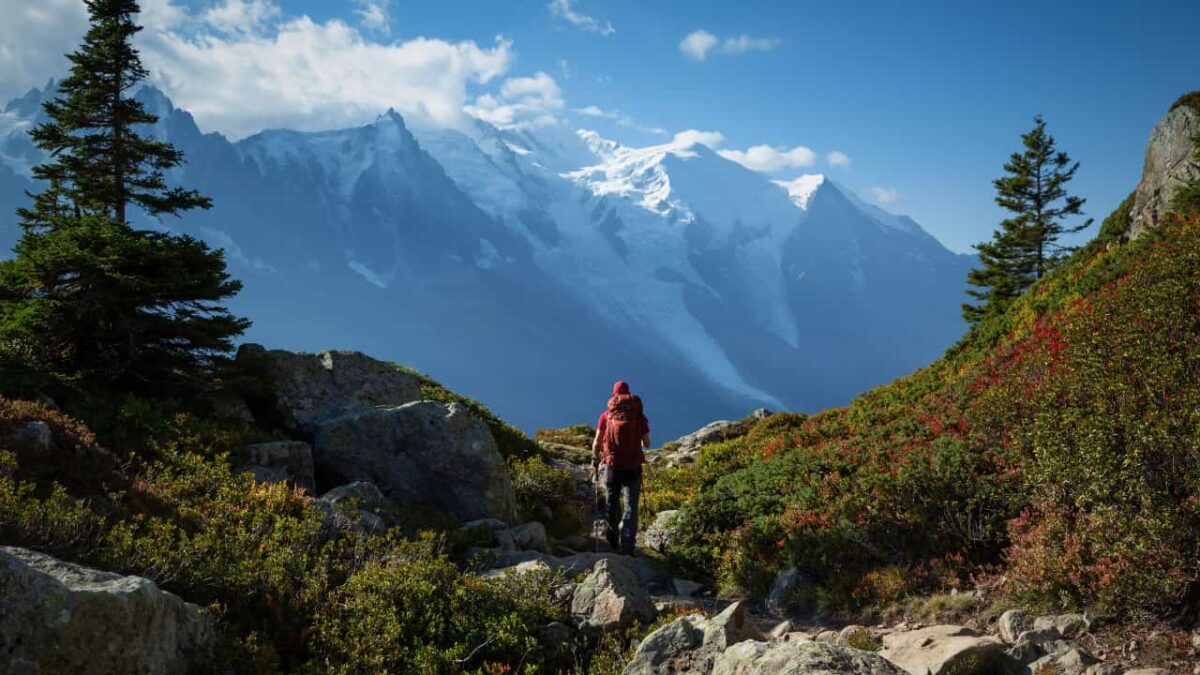
Beginners brace for the climb. The climb is honest. It is hard, you know it is hard, you go slow, you get there. The descent is the part that sneaks up on you.
Every step downhill drives force through your knees and quads, over and over, for miles. By the bottom your legs are cooked, your footing gets sloppy, and tired legs are exactly how a rolled ankle happens. If you are carrying a bigger body, or coming back after time off, that downhill pounding lands harder, because there is simply more of you arriving on each step. That is not a flaw in you. It is physics, and it is manageable once you respect it.
The fix is mostly technique and patience: shorten your stride, stay light on your feet, and slow down on the rocky stuff instead of letting gravity drag you into a stumble. We go deep on this in Your Quads Aren’t the Problem, and the same ideas apply at a walking pace. Eat something at the high point too. A clear head makes better foot placements than a hungry one.
Heat and weather outrank the view
The thing most likely to ruin your hike is not a bear or a snake. It is weather, usually heat.
Heat hurts more hikers than any animal, and it does it quietly, by wearing you down until your judgment goes fuzzy. If there is a heat warning for your trail, that is a no, not a maybe. If you go anyway on a warm day, start before sunrise and aim to be off the climb before the worst of it arrives mid morning.
The same honesty applies once you are out there. Clouds building, a sudden cold gust, thunder in the distance: those are the trail telling you something. Turning around is not quitting. The mountain does not adjust to your plans, so you adjust to its conditions, and you live to come back next weekend. Some of the most experienced hikers you will ever meet are the ones most willing to bail.
How to pick a first hike you will actually finish
Respecting the difficulty does not mean picking something brutal. It means picking something honest, then taking it seriously. For a true first hike, aim for under five miles with less than about 1,000 feet of gain. If you can comfortably walk three miles around your neighborhood today, you are ready for that.
- Choose a popular, well reviewed trail. A busy path is less peaceful, but if you take a wrong turn or need help, other people on the trail are a safety net.
- Do not trust a single app. Check the official park page, road and trail closures, water availability, and whether the hike even makes sense in the current season before you drive out.
- Be honest about your fitness right now, not the fitness you are picturing. If your goal hike is bigger, build up to it by adding about ten percent more distance each week rather than jumping straight to the hard one.
Not sure hiking is even your discipline yet? That is a fair question, and our Start Here guide helps you sort it out before you buy a single thing.
Pace it like it is not a race
Start slower than feels natural. The cheapest way to check your pace is the talk test: if you are too winded to hold a conversation, you are spending energy you will badly want on the climb out.
Break the hike into chunks instead of staring down the whole thing. Pick the next bend, the next big tree, the next overlook, and just get there. At every junction, turn around and take a mental snapshot of how it looks from the other direction, because the trail wears a completely different face on the way back, and that one glance can save you from a wrong turn when you are tired.
What “harder than they tell you” actually buys you
Here is the part the easy-breezy versions miss. The difficulty is not the cost of hiking. It is the reward.
A walk that asks nothing of you gives nothing back. The reason that first real summit lodges in your memory is that the climb was honest and you met it anyway. Some of it is fun in the moment, and some of it only turns fun once you are back at the car telling the story, legs trashed and grinning. Both kinds count. Both are yours.
So go in with your eyes open. Pick a smart first hike, respect the climb and the descent, watch the weather, and let it be a little harder than the brochure promised. That is not a warning. That is the whole reason people fall in love with walking into the hills and keep coming back.
Whatever your next mile looks like, earn it.