Why Rucking Burns Twice the Calories of Walking Without Destroying Your Knees
Rucking burns 2 to 3 times more calories than walking, builds real muscle, and is easy on your joints. Here's an honest, beginner-friendly breakdown of why rucking works for weight loss and how to start.

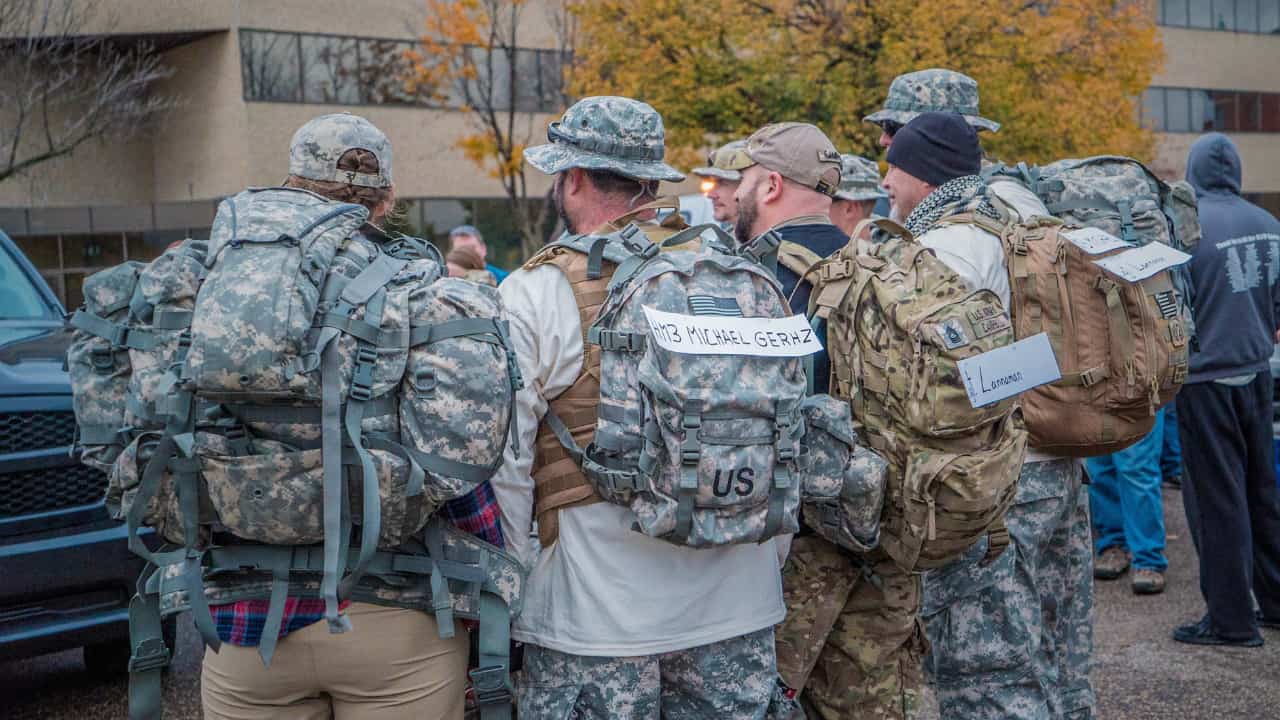
Let’s skip the hype and give you a straight answer: yes, rucking is genuinely effective for weight loss. Not in a “this influencer swears by it” way. In a physics-and-biology way. In a “I went from 300 pounds to 257 and this is what actually moved the needle” way.
But effective doesn’t mean magic. It means consistent, sustainable, and smarter than most of the alternatives available to people who are heavier, newer to fitness, or just getting started again. This post breaks down exactly why rucking works, what it does to your body, and how to start without overdoing it.
If you want the full head-to-head breakdown of rucking against regular walking, including gear, muscle activation, and metabolic rate, that’s all covered in our guide on rucking vs walking for fat loss. This post focuses specifically on the weight loss question and gives you an honest answer without the fitness industry gloss.
What Rucking Actually Does to Your Body
Rucking is walking with a weighted backpack. That’s the whole thing. No complicated movements to learn, no gym membership required, no special fitness level needed to begin.
What makes it different from regular walking is what the added weight forces your body to do. Every step you take under load demands more from your muscles, your cardiovascular system, and your metabolism. Specifically:
- Your heart rate rises without any increase in pace
- Your glutes, hamstrings, and calves work harder to drive each step
- Your core and spinal erectors brace constantly to keep you upright under the load
- Your traps, rhomboids, and upper back support the pack and maintain posture
- Your overall calorie burn increases significantly because more muscle mass is engaged throughout
The result is something that doesn’t fit neatly into “cardio” or “strength training” because it’s genuinely both at the same time. That combination is rare and valuable, and it’s exactly why rucking punches above its weight for fat loss.
The Calorie Burn Is Real and It’s Significant
One of the most common questions people ask about any new exercise is “how many calories does it burn?” With rucking, the answer is genuinely impressive compared to other low-impact options.
Rucking burns roughly 2 to 3 times more calories than walking at the same pace and distance. At 250 pounds, a 3-mile walk might burn 350 to 400 calories. The same 3 miles rucking with a 25 to 30 pound pack can push that to 500 to 650 calories. Same time. Same distance. Meaningfully more work done by your body.
The reason is straightforward: you are moving more total mass with every step. Your body burns energy proportional to the mass it has to move. Add 25 pounds to your back and your energy expenditure goes up accordingly, spread across every step of every mile.
For heavier beginners specifically, this effect compounds. At 250 pounds, your body is already burning more calories per mile than a 160-pound person doing the same walk. Add a pack on top of that and you’re in territory that rivals a moderate jog, without the joint stress that jogging at 250 pounds brings.
Zone 2 Training: Why the Intensity Level Matters
Here’s something most beginner fitness content glosses over: not all calorie burn is created equal when it comes to fat loss.
Your body has different fuel preferences depending on how hard you’re working. At very low intensity, you burn mostly fat but not much of it. At very high intensity (sprinting, hard intervals), you burn a lot of calories but mostly from stored carbohydrates. The sweet spot for fat burning is the middle, what exercise scientists call Zone 2, roughly 60 to 75% of your maximum heart rate.
This is the aerobic fat-burning zone where your body preferentially pulls from stored fat to fuel the effort. The problem with regular walking is that it often doesn’t get you into Zone 2 once your body has adapted to it. It’s just not hard enough.
Rucking solves this without requiring speed. The added weight naturally elevates your heart rate into Zone 2 at a pace that feels completely manageable. You can hold a conversation. You’re not gasping. But your body is working at the intensity where fat is the primary fuel source, for the entire duration of the ruck.
This is one of the most underrated advantages rucking has over both casual walking and high-intensity cardio. It keeps you in the fat-burning zone consistently, without the recovery cost of harder training.
It Builds Muscle While You Burn Fat
This is the piece most people miss, and it’s critical for long-term weight loss success.
Pure cardio burns calories during the workout but does little for your muscle mass. And muscle mass matters enormously for weight loss because muscle is metabolically active tissue. The more of it you carry, the more calories your body burns at rest, every hour of every day, including the 23 hours you’re not exercising.
When people lose weight through calorie restriction alone or through pure cardio, they often lose muscle alongside fat. This slows their metabolism over time, making it progressively harder to keep losing weight and easier to regain it.
Rucking resists this pattern. Because it applies consistent resistance to your legs, core, and upper back, it sends a signal to your body to maintain and build muscle tissue even as you lose fat. You’re not just getting lighter. You’re getting stronger and more metabolically efficient at the same time.
Over months of consistent rucking, this muscle-building effect gradually raises your resting metabolic rate (RMR), the number of calories your body burns just to function. That’s a compounding advantage that most beginner-friendly exercises simply can’t offer.
Low Impact Means You Can Actually Keep Doing It
Sustainability is the most underrated factor in any weight loss approach. The best workout is the one you can do consistently for months, not the one that burns the most calories in a single session before breaking you down.
Rucking is low impact. Unlike running, it doesn’t repeatedly slam your joints into the ground under high force. For heavier folks especially, running carries a serious injury risk because of the compressive load on knees, hips, and ankles at higher bodyweights.
Rucking keeps one foot on the ground at all times, the way walking does. The added weight increases muscular demand and calorie burn without increasing joint stress to dangerous levels. That means you can ruck 2 to 3 times per week, week after week, without the overuse injuries that derail so many running programs.
Consistency over months is what produces real weight loss results. Rucking is built for consistency in a way that high-impact cardio is not.
How to Start Rucking for Weight Loss
Getting started is simpler than most people expect. Here’s what actually matters.
Start Lighter Than You Think You Need To
Begin with 10 to 20 pounds, or roughly 10% of your bodyweight. At 200 pounds, that’s 20 pounds. At 250 pounds, that’s 25 pounds. This might feel underwhelming at first, but your feet, ankles, lower back, and connective tissue all need time to adapt to carrying load. Jumping straight to 40 pounds is a fast track to shin splints and lower back soreness that sidelines you for a week.
Start light. Add weight gradually. Your body will tell you when it’s ready for more.
Use a Pack That Actually Fits
Keep your back straight, your shoulders relaxed, and your core lightly braced throughout the ruck. Posture matters more when you’re carrying weight because a forward lean pulls your lower back into stress positions over time.
For the pack itself, you don’t need anything fancy to start. A regular backpack with padded shoulder straps and ideally a chest strap to keep the load stable works fine for beginners. A chest strap distributes the weight more evenly and prevents the pack from swinging side to side, which throws off your gait.
As you get more serious, purpose-built ruck packs are designed specifically to carry weight close to your spine, which is the most comfortable and biomechanically sound position.
Ruck 2 to 3 Times Per Week for 40 to 60 Minutes
This is the frequency and duration sweet spot for beginners. Two to three sessions per week gives your body enough stimulus to adapt and burn fat while leaving adequate recovery time between efforts.
Forty to sixty minutes at a steady pace covers 2 to 3 miles for most people, which is a solid beginner session. Focus on a brisk, consistent pace rather than going fast. The weight is doing the work. You don’t need to power-walk to get the benefit.
Add Weight Before Distance
Once your current ruck feels manageable, add weight before extending distance. This is the smart progression order. Adding 5 pounds challenges your body in a new way without the additional joint stress of longer distances. Once the new weight feels comfortable, then extend your distance.
This approach keeps the training effect strong while minimizing injury risk, which is what keeps you rucking consistently over the long haul.
What Realistic Results Actually Look Like

Here’s the honest part that most fitness content skips. Rucking is not a fast fix. If you ruck 3 times per week with reasonable nutrition habits, you should expect to see meaningful body composition changes within 4 to 8 weeks, with more significant fat loss accumulating over 3 to 6 months of consistency.
The scale may not move as fast as you’d like early on, because you’re building muscle while losing fat. The two can partially offset each other on the scale while your body is genuinely changing. Your clothes will tell the real story before the scale does. Trust that signal.
What rucking does better than almost anything else for heavier beginners is give you a sustainable, progressive, joint-friendly path that keeps working as long as you keep adding weight. There’s no ceiling. There’s no point where you’ve “gotten too good at it” and have to switch activities. You just add load and keep going.
That’s the honest answer. Rucking works because it’s hard enough to drive real results, simple enough to stick with, and smart enough to build muscle while burning fat. Start light, stay consistent, and add weight when your body is ready.
The best message is to throw on a pack and get moving, no matter your age or goal.