Out of Breath Running or Climbing Stairs? Your VO2 Max Is Trying to Tell You SomethingBuild the engine, lift the ceiling.
How-To & Guides

Rucking is walking with a weighted backpack. It is one of the simplest, most effective, and most underrated forms of exercise available, sitting at the intersection of cardio and strength training in a way that neither running nor walking alone can replicate. Borrowed from military culture where loaded marches are a cornerstone of physical and mental conditioning, rucking has grown into a mainstream fitness discipline with a passionate global community built around it.
Benefits: Strengthens back, burns calories, and builds grit
Expected Startup Costs: $100 to $600 per year (pack + plates + events)
Rucking is the practice of walking or hiking with a weighted pack on your back, typically a purpose-built rucksack loaded with steel or cast iron weight plates. The added load increases the metabolic and muscular demands of walking significantly, turning what would otherwise be a low-intensity activity into a genuine full-body workout that elevates heart rate, loads the posterior chain, and builds functional strength alongside cardiovascular fitness.
The origins of rucking are military. Soldiers carry heavy packs over long distances as a fundamental component of training and operational readiness, and the physical conditioning it produces, strong back and shoulders, durable legs, and a trained cardiovascular system, translates directly to the demands of sustained physical effort under load. The civilian version of rucking retains the essential elements of the military practice while removing the operational context, making it accessible to anyone who wants its benefits without signing up for service.
In practical terms, a ruck involves loading a pack with somewhere between ten and fifty or more pounds of weight, putting it on your back, and walking. The distance, pace, terrain, and load can all be varied to adjust difficulty, making rucking infinitely scalable from a gentle twenty-minute neighborhood walk with a light pack to a competitive twenty-four hour event covering fifty miles or more with significant weight. Most recreational ruckers operate somewhere in the middle of that range, covering five to fifteen kilometers at a brisk pace with fifteen to thirty pounds in their pack.
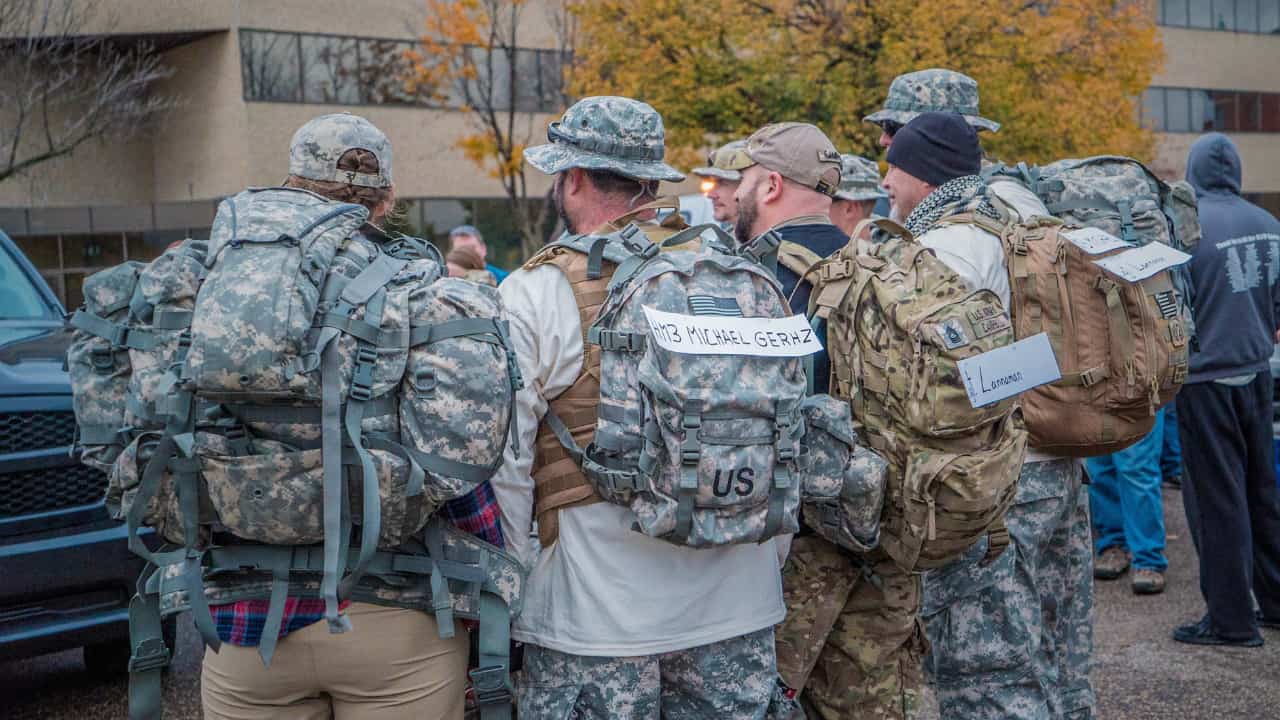
The community around rucking in the civilian world has grown substantially, driven in large part by GORUCK, a company founded by a former Special Forces soldier that organizes rucking events ranging from easy five-kilometer social rucks to grueling twelve-plus hour Challenge events that push participants to their physical and mental limits. These events have built a culture around rucking that emphasizes community, shared hardship, and the particular satisfaction of completing something genuinely difficult alongside other people.
Starting rucking requires almost no preparation beyond acquiring a pack and some weight to put in it. If you already own a sturdy backpack, you can begin today by loading it with books, water bottles, or a bag of sand and going for a walk. The load does not need to be calibrated precisely to begin experiencing the benefits. The goal on day one is simply to experience what walking under load feels like and to start building the postural and muscular adaptation that carrying weight demands.
When you are ready to invest in proper equipment, a purpose-built rucksack from a company like GORUCK, 5.11 Tactical, or a quality hiking pack brand makes a meaningful difference in comfort and durability over cheap alternatives. Purpose-built ruck packs are designed with a stiff back panel that keeps weight close to your spine, padded shoulder straps rated for heavy loads, and a simple internal structure that accepts standard weight plates cleanly. The difference in comfort between a well-designed ruck and a cheap backpack loaded with weights becomes apparent within the first kilometer.
Start with a light load, typically ten to fifteen percent of your body weight, and a distance that is comfortable for your current fitness level. Many beginners start with ten to fifteen pounds and a three to five kilometer route and find this a surprisingly effective workout. Build load and distance gradually over weeks rather than immediately pushing to heavy weights over long distances, as the shoulders, spine, and hips need time to adapt to carrying load in a way that reduces injury risk.
Paying attention to posture from the beginning is important and often overlooked. Rucking with a rounded back, forward head posture, or an improperly fitted pack places unnecessary stress on the lower back and shoulders and reduces the effectiveness of the exercise. Stand tall, keep your chest up, look forward rather than down, and ensure your pack sits high on your back with the weight close to your spine rather than hanging low behind you.
How-To & Guides
Nutrition & Fueling

Mindset & Motivation
Month 1: The first adaptation your body makes is postural and structural rather than cardiovascular. Your trapezius, rhomboids, rear deltoids, and spinal erectors are doing work they are not accustomed to, and you will feel this most clearly in your upper back and shoulders after your first several rucks. This soreness is completely normal and resolves as your body adapts to carrying load. Start with two to three rucks per week of thirty to forty-five minutes with a light pack and prioritize consistent posture over pace or distance.
Your cardiovascular system will adapt faster than your musculoskeletal system in this phase. You may find the aerobic demand of early rucks modest compared to the structural fatigue you feel in your back and shoulders. This is expected and the balance shifts as your body adapts. Resist the temptation to add significant weight before your posture and structural capacity have developed, as loading an unprepared back too quickly is the most common source of rucking-related discomfort.
Month 2: Your body is adapting meaningfully. The upper back soreness has reduced and carrying your current load is starting to feel more natural. This is the right time to begin extending either your distance or your load, but not both simultaneously. A general rule is to increase one variable at a time and to add no more than ten percent additional weight or distance per week. Many ruckers find increasing distance first and then adding load a sensible progression, as it builds the aerobic and structural base before increasing intensity.
Begin varying your terrain if you have only been rucking on flat surfaces. Adding hills, even gentle ones, substantially increases the demand on your glutes, calves, and cardiovascular system on the way up and places eccentric load on your quads on the way down. Varied terrain also keeps sessions mentally engaging and develops the ankle stability and postural adaptability that flat surface rucking alone does not fully develop.
Month 3: You have established a genuine rucking practice and the physical changes are becoming visible and measurable. Your posture likely feels more upright and natural even when not rucking, your walking pace under load has increased, and distances that felt ambitious in week one are now comfortable. This is a good time to set a specific goal for the next phase, whether a target load, a distance milestone, a ruck with significant elevation gain, or entry into an organised rucking event.
Consider joining a local rucking group or GORUCK community event. Rucking with others, particularly in an event format with a shared challenge, is a significantly different and often more powerful experience than solo rucking. The social dimension of the sport and the sense of collective accomplishment after a hard event are among the most frequently cited reasons people stay committed to rucking over the long term.
Rucksack ($50 to $300): A purpose-built rucksack is the most important investment in rucking. GORUCK makes the most widely used and well-regarded ruck packs in the civilian rucking community, with their GR1 and GR2 models offering exceptional durability, a comfortable load-carrying system, and a lifetime guarantee. Quality alternatives from 5.11 Tactical, Mystery Ranch, and military surplus suppliers are also worth considering. The key features to look for are a stiff internal frame sheet that keeps weight against your back, padded and structured shoulder straps, and a simple design that accepts weight plates without excessive movement inside the bag.
Ruck plates ($40 to $120): Steel or cast iron weight plates designed to fit inside a ruck pack are the standard loading method for serious ruckers. GORUCK sells flat steel plates in ten, twenty, and thirty pound increments designed to fit their packs precisely. Standard bumper plates from a gym supply store work in larger packs as a more affordable alternative. Avoid loading your pack with loose items like water bottles and books for anything beyond casual experimenting, as they shift and move in ways that affect balance and comfort over longer distances.
Footwear ($80 to $180): The right footwear for rucking depends on the terrain you cover most often. A supportive trail shoe or light hiking boot works well for most conditions, providing the ankle support and grip that carrying a heavy load over varied terrain demands. Pure road running shoes are acceptable for urban rucking on pavement but lack the lateral stability that loaded walking on uneven surfaces requires. Whatever shoe you choose should fit well with the socks you plan to ruck in, as foot swelling under load over long distances makes an already-tight shoe significantly more uncomfortable.
Socks ($15 to $40 per pair): Quality merino wool or synthetic hiking socks make a meaningful difference in blister prevention and foot comfort over longer rucks. Thin cotton socks compress under load, hold moisture, and create friction that leads to blisters on rucks longer than an hour. Merino wool socks manage moisture, resist odor, and provide cushioning that holds up over many hours of walking under load. Darn Tough and Smartwool are the most widely recommended brands among experienced ruckers.
Heart rate monitor, optional ($50 to $300): Tracking heart rate during rucks helps you understand the cardiovascular demand of different loads, distances, and paces, and allows you to ensure you are working at an appropriate intensity for your fitness goals. A basic wrist-based heart rate monitor is sufficient. This becomes more useful as your rucking becomes more structured and you begin training toward specific events or fitness targets.
GORUCK or organised event entry fees ($25 to $200): GORUCK and similar organisations run events at multiple difficulty levels, from casual five kilometer social rucks costing around $25 to full Challenge events of twelve or more hours costing up to $175 or more. Other organised rucking events, charity rucks, and military fitness events that include rucking components exist in most regions and provide motivating targets and community that solo rucking cannot replicate.
Rucking progression is driven by three variables that can be adjusted independently or in combination: load, distance, and pace. This three-dimensional scalability is one of the things that makes rucking uniquely adaptable as a long-term fitness practice. A beginner building their first fitness base and a seasoned athlete training for a competitive event can both find appropriate challenge within the same activity by adjusting these variables to match their current capacity and goals.
Load progression is the most powerful lever for increasing the physical demand of rucking. Adding weight to your pack increases the muscular and cardiovascular demand of every kilometer you cover, builds greater strength adaptations in the posterior chain and core, and more closely mimics the demands of military and event-based rucking. A sensible progression adds no more than five pounds to your working load every two to four weeks, allowing the body to adapt structurally before the next increment is introduced. Most recreational ruckers find a working load of twenty to thirty pounds for regular training rucks provides the right balance of challenge and manageability for distances of five to fifteen kilometers.
Distance progression follows a similar patient approach. Building your standard ruck distance from five kilometers to ten to fifteen to twenty and beyond over months rather than weeks allows the feet, ankles, knees, hips, and lower back to adapt progressively to the cumulative load of carrying weight over longer periods. The connective tissue adaptations that make long-distance rucking sustainable develop slowly and are the most common limiting factor for people who try to increase distance too quickly.
Pace is the variable most directly connected to cardiovascular fitness development. A brisk rucking pace of five to six kilometers per hour with a meaningful load elevates heart rate into an aerobic training zone that produces genuine cardiovascular adaptation over time. Interval rucking, alternating between periods of faster and slower pace with the pack on, mirrors the interval training structures used in running and cycling and accelerates fitness development beyond what steady-pace rucking alone provides.
Supplementary strength training significantly enhances rucking performance and reduces injury risk. Exercises that directly support the demands of carrying a pack include Romanian deadlifts and hip hinges for the posterior chain, farmers carries and shrugs for trap and shoulder endurance, single-leg exercises like step-ups and lunges for unilateral leg strength, and planks and anti-rotation exercises for core stability. Even one to two strength sessions per week that target these movement patterns produces meaningful improvements in rucking capacity and durability over a training cycle.
For people drawn toward competitive or event-based rucking, the progression from casual training rucks to completing a GORUCK Light event, then a GORUCK Tough, and eventually a GORUCK Heavy or similar endurance challenge provides a structured ladder of increasingly demanding goals that keep training purposeful and the practice engaging for years. Each step requires a meaningful increase in both physical preparation and mental readiness, and the accomplishment of completing progressively harder events is one of the most powerful motivators the sport offers.