Out of Breath Running or Climbing Stairs? Your VO2 Max Is Trying to Tell You SomethingBuild the engine, lift the ceiling.
How-To & Guides

Mountain biking is off-road cycling on natural and purpose-built trails that vary from flowing dirt singletracks through forests to steep technical descents over rock faces, roots, and drops. It demands physical fitness, bike handling skill, and a willingness to ride through discomfort and uncertainty. The reward is access to terrain and experiences that no other sport quite delivers.
Benefits: Sharpens focus, coordination, and fearless outdoor confidence
Expected Startup Costs: $1,000 to $6,000 per year (bike + protective gear + trail access + maintenance)
Mountain biking is the practice of riding a bicycle designed for off-road terrain on trails, forest tracks, hillsides, and purpose-built trail centers. Unlike road cycling, which rewards smooth sustained power output on predictable surfaces, mountain biking demands constant physical and mental adaptation to terrain that changes with every meter. Rock gardens, rooted climbs, loose corners, switchbacks, drops, and jumps all require different techniques, body positions, and decision-making speeds.
The sport encompasses a wide range of disciplines. Cross-country mountain biking, commonly called XC, emphasizes fitness and climbing ability across long distances on varied terrain and is the format represented at the Olympic Games. Trail riding sits in the middle ground, covering moderate to technical terrain at a pace that balances fitness with technical challenge and represents by far the most popular category of recreational mountain biking. Enduro racing involves timed descending sections with untimed climbing transfers between them. Downhill racing takes place on steep, purpose-built courses with significant jumps, berms, and technical features, ridden at speeds that make it one of the most adrenaline-intense disciplines in all of cycling.
Most recreational mountain bikers ride trail or all-mountain terrain on bikes with between one hundred and one hundred and fifty millimeters of suspension travel front and rear. This range of bike provides enough cushioning and control for technical terrain while remaining efficient enough to pedal uphill without excessive effort. Bike geometry, tire width, and suspension setup all significantly affect how a bike handles and how confident a rider feels on challenging terrain.
Mountain biking exists both as a competitive sport with a structured race calendar and as a purely recreational pursuit. Many mountain bikers never race and instead ride for the experience of exploring natural terrain, the flow state that comes from technical riding, the community of fellow riders, and the physical workout that a good trail ride provides without ever feeling like exercise.
The most important first step is getting onto a trail on a mountain bike, even before making any significant equipment investment. Many bike shops and trail centers offer rental mountain bikes, which allows you to experience the sport and assess whether it resonates with you before spending money on your own bike. A single afternoon on a beginner-friendly trail network tells you far more about whether mountain biking is for you than any amount of research online.
When you are ready to buy a bike, visit a reputable mountain bike shop rather than purchasing online without guidance. The staff can assess your intended riding, budget, and body size and point you toward an appropriate bike. Frame size, wheel size, and suspension travel are the three variables that matter most for beginners, and getting these wrong at the point of purchase leads to a bike that is either too intimidating to ride well or too limited to progress on as your skills develop.
Find beginner-rated trails at a local trail center or purpose-built bike park for your first rides. These trails are designed and maintained to be progressive, with consistent surfaces, manageable gradients, and features that introduce technical elements gradually. Riding on trails that exceed your current skill level early on is a fast way to have a frightening experience that undermines confidence before it has a chance to develop.
Consider taking a skills lesson from a qualified mountain bike coach, even just a single half-day session. Fundamental body position, braking technique, and cornering skills learned correctly from the beginning prevent bad habits that are much harder to unlearn later. The basics of mountain biking technique are counterintuitive in several places, and a coach accelerates the learning process significantly compared to figuring things out through trial and error alone.
How-To & Guides
Nutrition & Fueling

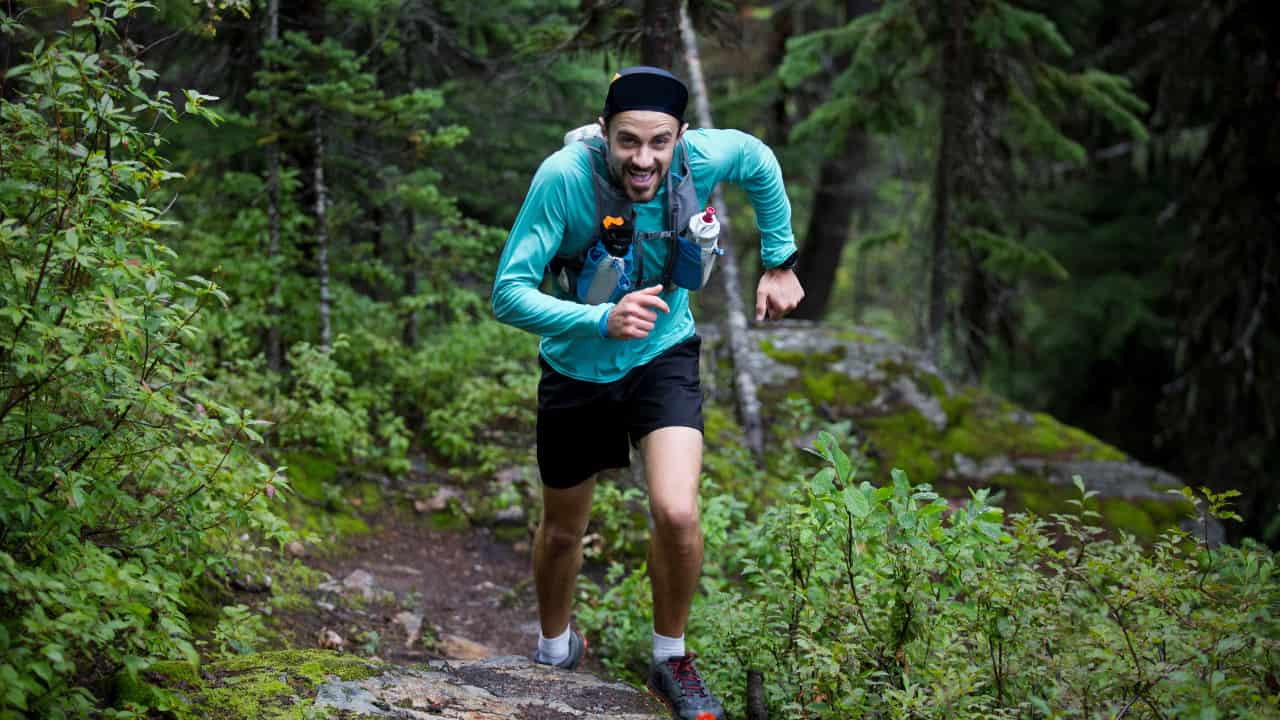
Month 1: Everything will feel slower and more effortful than you expect. Technical features that look manageable from a distance reveal themselves as significantly more challenging when you are actually riding toward them. This gap between perception and execution is completely normal and narrows quickly with repeated exposure. The goal in this month is to ride regularly on beginner terrain, build basic bike handling confidence, and develop a feel for how your bike responds to your inputs.
Expect to dab a foot down frequently, to walk sections you cannot yet ride, and to feel mentally tired after relatively short rides. Mountain biking demands intense concentration in a way that road cycling does not, and mental fatigue sets in faster than physical fatigue in the early stages. Keeping your first rides to sixty to ninety minutes allows you to stay focused and engaged rather than pushing into tired, sloppy riding that reinforces poor technique and increases fall risk.
Month 2: Your bike handling starts to feel more natural and certain movements begin to happen automatically rather than requiring conscious thought. Braking before corners rather than through them, weighting and unweighting the bike over roots and rocks, and looking ahead on the trail rather than directly in front of your wheel are the three skills that typically click first and transform the experience most dramatically when they do.
Begin exploring slightly more varied terrain while staying within beginner to low-intermediate difficulty ratings. Seek out trails with different character, some rooty, some rocky, some with flowing bermed corners, to expose your handling skills to varied demands. Each terrain type teaches your body something different about balance, momentum, and bike control. Start building your weekly riding volume gradually, aiming for two to three rides per week if schedule allows.
Month 3: You are developing a genuine sense of your strengths and the technical areas where you want to improve. Some riders find climbing technical and physically demanding but flow easily on descents. Others are strong climbers who find technical descending intimidating. Identifying these tendencies helps you direct your practice time effectively and choose trails that address your specific development needs.
This is also the phase where many riders begin thinking about their first organized ride or event. Charity rides, group trail days organized by local clubs, and beginner-category cross-country races all provide motivating targets and the opportunity to ride with more experienced cyclists who can share knowledge about local trails, technique, and bike setup. Set a specific riding goal for the next three months, whether a particular trail, a local event, or a technical feature you want to clean consistently.
Mountain bike ($800 to $4,000): The bike is the largest single investment in mountain biking and one where quality genuinely matters for safety and enjoyment. An entry-level hardtail, meaning a bike with front suspension only, in the $800 to $1,500 range is the recommended starting point for most beginners. Hardtails are lighter, simpler to maintain, and excellent for developing technique because they are less forgiving of poor body position than full-suspension bikes. Full-suspension bikes, which have both front and rear shock absorbers, provide more control and comfort on technical terrain and are worth considering from $1,800 upward once you know the sport is for you.
Helmet ($60 to $300): A properly fitting helmet is the single most important safety item in mountain biking. A standard trail or XC helmet with MIPS technology, which reduces rotational impact forces in a crash, is appropriate for most trail riding. A full-face helmet that covers the chin and jaw is strongly recommended for downhill riding, bike park laps, and any riding on steep or highly technical terrain where the consequences of a forward fall are severe.
Knee and elbow pads ($60 to $200): Protective pads are not optional accessories in mountain biking, they are sensible standard equipment for anyone riding on technical terrain. Lightweight trail pads that sit close to the body and allow free movement are worn by experienced riders at all levels. Heavier enduro-style pads with more coverage are appropriate for bike park and downhill riding. Falling without pads on rocky terrain produces injuries that sideline training for weeks. Falling with pads on the same terrain often produces bruises that disappear in days.
Clipless pedals and shoes or flat pedals and shoes ($60 to $200): Mountain bikers are genuinely divided on clipless versus flat pedals, and both systems have legitimate advantages. Clipless pedals improve pedaling efficiency and keep your feet connected to the bike on rough terrain. Flat pedals allow you to put a foot down instantly in technical situations and are widely recommended for beginners and for riders developing technical skills. Purpose-built flat pedal shoes with sticky rubber soles dramatically outperform regular trainers and are worth the investment regardless of which pedal system you choose.
Hydration pack ($50 to $150): A small hydration pack that carries one to two liters of water, a basic tool kit, a spare inner tube, and a pump is standard equipment for trail rides of any meaningful length. Keeping your hands on the handlebars and your eyes on the trail while staying hydrated requires a pack rather than a bottle cage on technical terrain. Many mountain bike specific packs also include back protection padding, which adds a useful layer of safety on more aggressive terrain.
Basic tool kit and spare tube ($40 to $80): A trail-side repair kit including a multi-tool, tyre levers, a spare inner tube or tubeless plug kit, a CO2 inflator or mini pump, and a chain link is essential for any ride more than a few kilometers from your car or home. Mechanical issues on remote trails without tools turn a minor inconvenience into a long walk out. Learning to fix a puncture and make basic adjustments is a skill every mountain biker should develop early.
Mountain biking progression happens across two distinct but deeply interconnected tracks: physical fitness and technical skill. Unlike pure endurance sports where fitness is the primary variable determining performance, mountain biking rewards technical skill development as heavily as cardiovascular capacity. A rider with excellent bike handling skills but modest fitness will often outperform a very fit rider with poor technique on any trail with meaningful technical content, which makes deliberate skill practice an essential component of any serious improvement plan.
On the fitness side, mountain biking develops cardiovascular endurance, leg strength, and core stability simultaneously. The varied intensity of trail riding, with steep climbs pushing heart rate to near maximum followed by technical descents that demand full-body tension and balance, creates a natural interval training effect that builds fitness across multiple energy systems at once. Supplementing trail riding with specific strength training, particularly single-leg exercises, hip hinge movements, and core stability work, builds the muscular foundations that make technical riding safer and more controlled.
On the skills side, progression follows a broadly predictable sequence. Fundamental body position, braking technique, and flat cornering come first and underpin everything that follows. Climbing technique, including weight distribution and traction management on steep or loose gradients, develops next. Descending confidence on increasingly technical terrain, including the ability to read lines, manage speed, and commit to features, develops over months and years of progressive exposure to harder terrain.
Structured skills practice is the fastest path to technical improvement and is underutilized by most recreational mountain bikers who simply ride trails without deliberate focus on specific techniques. Returning repeatedly to a single technical feature, a particular corner, a specific rock roll, or a small drop, and focusing on executing it with better technique each time produces faster improvement than covering more trail mileage at the same difficulty level. Video analysis of your own riding, either self-recorded or reviewed with a coach, reveals body position errors that are invisible to the rider in the moment but obvious on screen.
Progression milestones in mountain biking tend to be terrain-based rather than time or distance based. Moving from green-rated beginner trails to blue intermediate trails, then to black-rated technical trails, and eventually to double-black or expert terrain provides a natural progression ladder that keeps the sport challenging and engaging across many years. Each step up in terrain difficulty requires both fitness and technique to have developed to a new level, which makes the progression genuinely satisfying rather than arbitrary.
Most riders who commit to two to three rides per week and incorporate some deliberate skills practice see significant improvement within a single season. The rate of technical improvement is typically fastest in the first two years, when the foundational skills are being established, and then continues at a slower but deeply satisfying pace for as long as the rider pursues progressively more challenging terrain.