Why the Fastest Trail Runners Walk Up Hills (And You Should Too)
Walking uphill isn't the beginner version of trail running, it's the expert move. Here's why the fastest runners hike the climbs, and how to do it right.

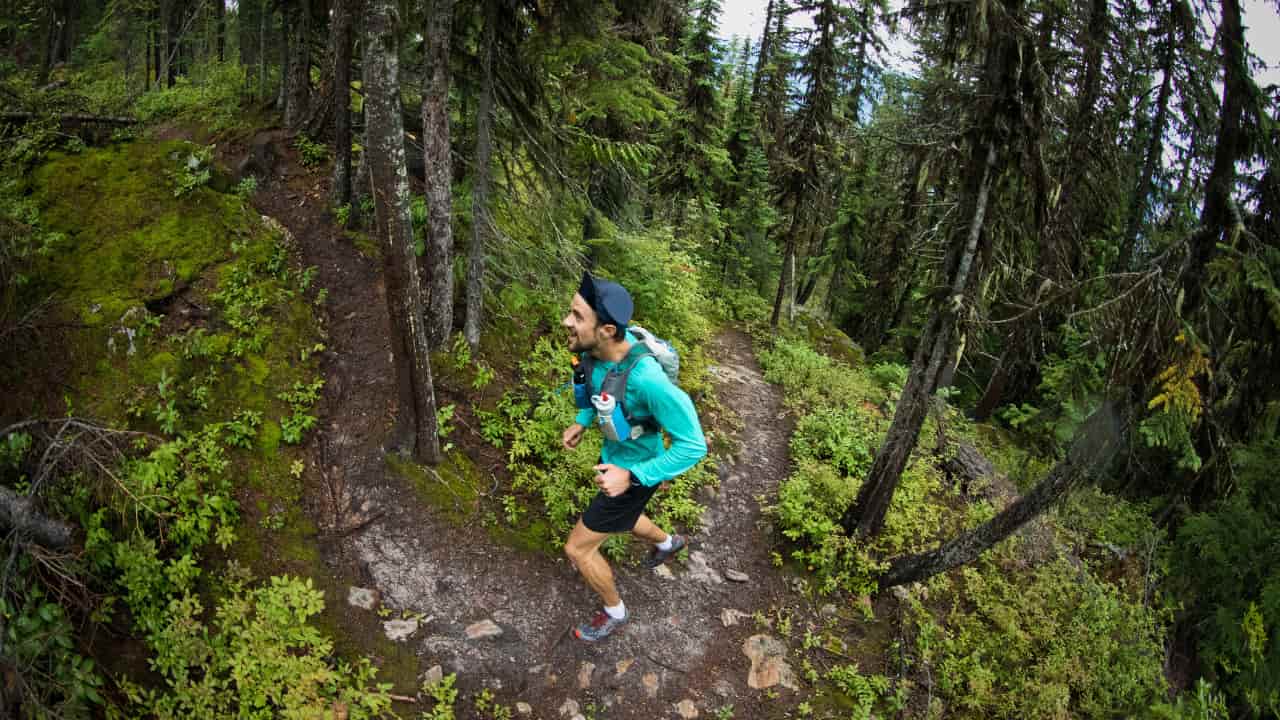
You hit the first real climb and your body betrays the plan. Your legs flood, your lungs go ragged, your watch shows a heart rate you have never seen sitting still. So you slow down. You walk. And somewhere in that walk a small voice tells you that a real trail runner would have kept running, that you are doing the discount version of this sport, that you got found out on the very first hill.
Kill that voice. It is wrong about almost everything.
Walking uphill is not the beginner’s apology for not being fit yet. It is the move the best trail runners in the world make on purpose, and the more they race, the more deliberately they do it.
The story you are telling yourself is backward
Most new runners assume the same thing. The hiking is temporary. Right now you walk the climbs because your engine is small, and someday, once you are fitter, you will run everything and leave the walking behind like training wheels.
It almost never works that way.
Watch the front of a steep mountain race and you will see something that breaks the beginner’s mental model. The leaders, the people who train for this full time, are hiking the steep pitches too. Hands on their thighs, heads down, climbing with purpose. They are not running that grade because running that grade is slower and far more expensive, and they learned that the hard way over years.
Why hiking a steep hill can be faster than running it
This part feels like a trick until you understand the math, so here it is in plain terms.
When a hill gets steep enough, running and walking start to cost roughly the same amount of time, except running costs you a great deal more energy to buy that time. Push past a certain grade and walking is not just close to running, it is actually faster for most people, because your running stride collapses into tiny, bouncing, pointless steps while your heart rate rockets into a zone you cannot hold.
For a fit road runner that crossover point sits up on the steeper grades. For a beginner, a bigger body, or anyone starting from zero, it shows up much sooner. That is not a flaw in you. That is physics meeting a hill, and the hill treats everyone the same way.
Running a steep climb spends your most limited resource, the matches you can burn before you blow up, on a stretch of trail where walking would have gotten you there nearly as fast for a fraction of the cost. Hiking the climb is the efficient choice, not the soft one.
There is a difference between walking and walking
Here is the distinction that turns this from an excuse into a skill.
There is the walk of defeat, the one you fall into when you are cooked. Shoulders slumped, eyes down, a shuffling drift up the hill while you wait to feel human again. We have all done it. It is recovery, it is fine sometimes, but it is not a tool.
Then there is the power hike, and it is a completely different animal.
How to actually power hike
Lean forward from the hips, not the waist, so your weight stacks over your driving leg. Take shorter steps than feel natural and let your glutes do the work instead of your calves. The signature move, the one that separates a hiker with a plan from a tired jogger, is hands on your quads. Press down on your thighs with each step. You are using your arms to help push your body up the hill, pulling load off your legs and giving them a tiny rest with every stride.
Keep your eyes up the trail, not on your feet. Find a rhythm you could hold for an hour, then hold it. Done right, a power hike feels strong and almost mechanical, like a machine grinding up a grade, and you will often crest the top past people who insisted on running the same hill and burned out halfway.
If you live somewhere flat and never see a real climb, you can still build the engine and the technique. Here is how flatlanders train for vert when the biggest hill nearby is a highway overpass.
The whole sport is built on this

If you ever drift toward longer trails, this stops being a nice efficiency trick and becomes the entire game.
The honest secret of ultrarunning is that finishing a 50K or a 100 miler is mostly a walking problem wearing a running costume. Nobody runs every step of a hundred miles. The finishers are not the people who run the hardest. They are the people who move the smartest; the ones who walk, or power hike, the climbs early and on purpose so their legs are still there at mile 80, when everyone who powered up the early hills has nothing left.
Run the flats. Float the downhills. Hike the climbs. That simple rhythm is the backbone of how real ultra distances actually get finished, and the runners who learn it early skip years of fighting their own instincts.
Permission to start today
So the thing you were embarrassed about on that first climb, the walking, is not the part of you that needs fixing. It is the part that will carry you furthest.
You were not caught doing trail running wrong. You stumbled into the exact thing the best in the sport spend years learning to do on command. The only thing to change is intent. Stop walking because the hill beat you, and start hiking because you decided to, because it is faster, cheaper, and smarter right here on this grade.
Next time the trail tilts up and your legs start to scream, drop your hands to your quads, shorten your steps, and climb like you meant to. You are not falling behind. You are doing the thing that lasts.
Whatever your next mile looks like, earn it.