The Runner Who Could Drop a 7-Minute Mile Got Wrecked by a Half-Mile Trail
New to running? Learn the key differences between trail running and road running, including terrain, gear, pace, and skills, so you can choose the right path for you.


You laced up your shoes. You are ready to run. But now someone mentions “trail running” and suddenly you are wondering if you have been doing it wrong on the road this whole time. Or maybe you have been on the trails and want to know if road running is worth trying.
Here is the honest truth: trail running and road running are both running, but they are not the same sport. The skills, the gear, the mindset, and even the fitness gains work differently depending on where your feet land. If you are just getting started, knowing the differences upfront saves you frustration, injury, and wasted money.
This guide breaks it all down in plain language.
What Is the Difference Between Trail Running and Road Running?
Road running happens on pavement, sidewalks, tracks, or any hard, consistent surface. The ground is predictable. Your pace is steady. The focus is on maintaining form and building cardiovascular endurance over distance.
Trail running takes you off pavement and onto dirt paths, rocky terrain, rooted forests, gravel tracks, and hillsides. The surface changes constantly. Your pace slows down. Your brain and body have to work together in a completely different way.
Think of it this way: road running is like driving on the highway, while trail running is off-roading.
How Your Performance Changes Between the Two
One of the biggest surprises for new runners is that being good at one does not automatically make you good at the other.
A strong road runner with excellent mile pace can jump on a trail and feel completely gassed within the first half mile. A seasoned trail runner can struggle on a flat road race because their body is trained for short bursts and elevation changes, not sustained flat-ground rhythm.
Here is why:
Pace Is Not the Same Metric
On roads, you track pace in minutes per mile and it means something. On trails, pace becomes almost irrelevant. A 15-minute mile on a steep, rocky trail is genuinely hard effort. Many trail runners switch to tracking time on feet and elevation gain rather than raw speed.
The Muscles Being Used Are Different
Road running builds strong quads and calves through repetitive forward motion. Trail running fires up your glutes, hip flexors, ankles, and stabilizer muscles constantly because you are adjusting to uneven ground with every step. Trail runners tend to develop stronger overall leg stability over time.
Mental Load Is Higher on Trails
On a road you can zone out with music and just run. On a trail, you have to watch every step. Roots, rocks, creek crossings, sudden elevation drops. Your brain is engaged the whole time, which is mentally tiring in its own way. Many people love this because it makes the run feel like an adventure rather than a chore.
I expected trail running would be challenging due to terrain, but the more I run the more I love it. It may be the backpacker in me but nature and being away from civilization is incredibly rewarding.
Gear Differences You Need to Know About
You do not need to buy everything at once, but gear does matter depending on where you run.
Shoes
This is the most important difference. Road running shoes are cushioned for hard surfaces and built for forward motion. Trail running shoes have lugged rubber outsoles for grip, reinforced toe boxes for rock protection, and lower heel-to-toe drop for stability on uneven ground.
Running in road shoes on trails is manageable on easy terrain, but on anything wet, rocky, or rooty you will slip and your feet will take a beating. It is one of the first investments worth making if you plan to run trails regularly.
Hydration and Nutrition
Road races and runs often have water stations or you can plan routes near water fountains. Trails typically have nothing. Trail runners learn to carry their own hydration using handheld bottles, hydration vests, or waist packs. Even on shorter trail runs, having water with you is a smart habit. Additionally, most trail runners pack gels and other quick on-the-go fuels to allow eating on the run without stops.
Safety Gear
On roads, safety is mostly about visibility and traffic. On trails, especially longer ones, it is smart to carry a charged phone, a basic first aid kit, and to let someone know your route. Getting hurt or lost on a remote trail with no cell service is a real scenario beginners do not always think about.
Which One Is Better for Beginners?
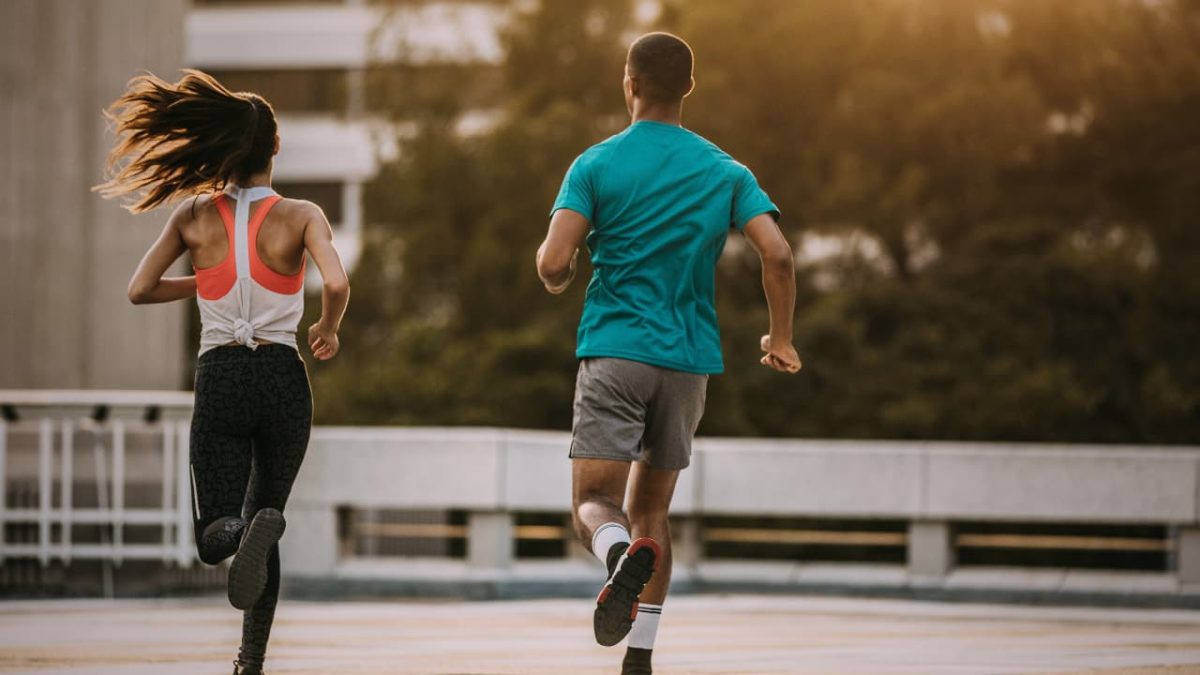
Neither is better. They are both great starting points, and the right one depends on what you are drawn to.
Choose road running if you:
Want a measurable, structured way to track progress like pace and distance, prefer running with music and minimal focus on the ground, live in an urban or suburban area with easy access to sidewalks and paths, or are training for a 5K or local race.
Choose trail running if you:
Want a lower-impact option since softer ground is easier on joints than pavement, prefer being in nature and want your run to feel like an experience, are comfortable with slower progress and more variation, or want a full-body workout that builds balance and coordination.
Can You Do Both?
Absolutely, and many runners do. Cross-training between trails and roads makes you a more well-rounded athlete. Road running builds your aerobic base and teaches pacing. Trail running builds strength, agility, and mental resilience. Together they fill in each other’s gaps.
A common approach for beginners is to do most weekly mileage on roads for structure and predictability, then add one trail run per week to build variety and strength.
The Bottom Line
Trail running and road running are two different endurance disciplines that share the same foundation. Starting with one does not lock you out of the other. What matters most is getting out there, learning your terrain, and building the habit of moving.
Pick the surface that excites you most right now. You can always explore the other one later, and when you do, you will already have more fitness and confidence than you think.