9 Ways Slower Trail Miles Made Me Faster Everywhere Else
Chasing pace on every run? Here are nine reasons slower trail miles quietly rebuild the engine that makes you faster on the road.


For years I treated my watch like a boss I was scared of. Every run had a target pace, and if I came in slow I felt like I had failed, even on a quiet Tuesday when nobody was watching. Trails did not fit that world. The pace looked embarrassing on paper, so I filed them under scenery, the thing you do on vacation, not real training. Anything slower than my road pace was junk miles dressed up in nice views.
I was wrong in a way that took me a couple of seasons to admit.
The slow trail miles were not costing me speed. They were quietly building the engine that my road pace was riding on. When I finally went back to the road after a winter of mostly trails, the same effort that used to feel like survival felt almost relaxed. Nothing in my training log said I should be faster. I had run “slower” all winter. And yet there I was, holding paces that used to break me.
Here is the part that matters for you, especially if you are newer and still deciding whether trails are worth the awkward pace. The slower is the point. Same effort, harder ground, lower impact. That trade is where the gains hide. Here are nine of them, in the order they showed up for me.
1. You learn to run by feel, not by watch
On a trail, your pace becomes a liar almost immediately. A rooty climb and a smooth descent can sit two or three minutes per mile apart while your effort barely changes. So you stop staring at the watch and start reading your breath, your legs, the burn in your chest.
That skill, running by effort instead of by number, is the foundation under every endurance plan worth following. Easy days finally felt easy, because I was running them by feel instead of chasing a number that was always a touch too fast for an easy day. Effort is the real currency, and the trail teaches it faster than any coach could.
2. Hills become strength work you never scheduled

Every trail climb is a set of squats you forgot you were doing. Pushing uphill recruits your glutes, calves, and quads in a way flat road miles never ask for, and it does it without a single trip to the gym. Power that used to require weights started showing up from simply running up things.
If you live somewhere flat and feel cheated, there are ways around it, and we walked through exactly that in how flatlanders train for mountain ultras. The point holds either way: the climb that slows you down is the same climb building the strength that speeds you up later.
3. Your ankles and feet stop feeling fragile
Pavement is the same surface forever. Your foot lands the identical way ten thousand times, which is great for pace and quietly terrible for resilience. A trail never lands the same way twice. Roots, rocks, ruts, and off camber dirt force the small stabilizing muscles in your feet and ankles to wake up and do their jobs.
After a few months my ankles stopped feeling breakable on uneven ground. A roll that once meant a week off became a wobble I could run through. Stability is trainable, and the trail trains it for free.
4. Your cadence gets quicker and lighter
You cannot run a technical trail with long, lazy, pounding strides. The ground will not allow it. Dodging a root or hopping a rock forces short, quick, light steps, and your feet learn to leave the ground the instant they touch it.
That quick turnover is exactly what coaches try to drill into road runners with metronome apps and cadence cues. The trail just installs it, because the alternative is falling. When I came back to the road, that lighter, faster step came with me.
5. You build a bigger aerobic base with less wear
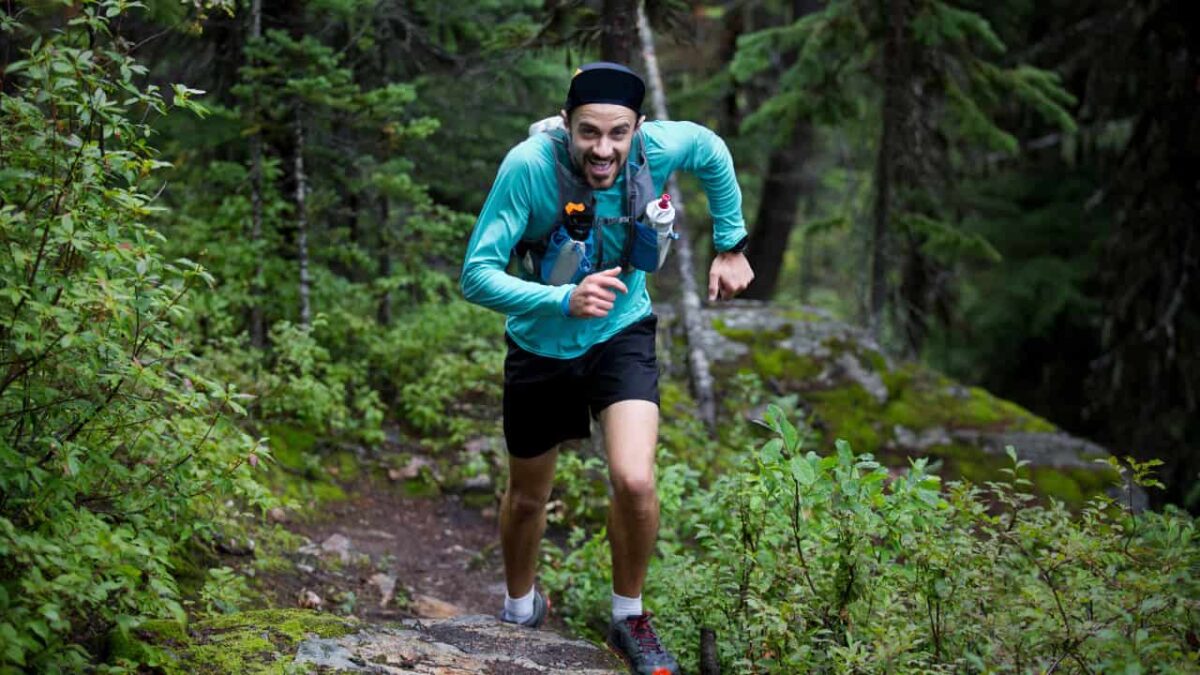
Here is the quiet magic. On trails you can stay out on your feet for two or three hours at an effort that barely dents you, banking aerobic time that would shred your legs at road pace.
Time on feet is what grows the aerobic engine, the network of capillaries and mitochondria that lets you hold any pace for longer. Because trail effort lands softer than the same duration on pavement, you can pile up more of it before your body protests. More base, less pounding, is about the best deal in endurance training.
6. You get hurt less, so you train more
Repetitive stress is the road runner’s curse. Same motion, same impact, same tissues loaded the same way, mile after mile, until something gives, the shin splints, the cranky IT band, the knee that only talks to you on long runs.
Varied terrain spreads the load around. Different muscles fire on every step, dirt softens the impact, and no single tissue gets hammered into the ground. I went from one nagging injury per training block to almost none. And the real speed secret nobody prints on a plan is plain: the runner who stays healthy keeps training, and consistent training beats brilliant training you keep interrupting.
7. You build patience that pays off in the back half
Trails are slow, and they make you sit in slow without panicking. You learn to grind up a climb knowing the watch looks bad, trusting that the work still counts even when the number does not flatter you.
That patience is gold on race day. The runner who stays calm and keeps working when the pace dips, instead of spiraling because the splits slipped, is the one who finishes the back half strong. I stopped racing the first half like my ego depended on it, and started racing the second half like my training did.
8. Your downhill mechanics and braking strength improve
Running downhill well is a real skill, and most road runners never build it because the road rarely asks for it. Descending steep trail teaches you to control your speed, land soft, and let your quads absorb force instead of stabbing the brakes with every step.
That eccentric strength, the muscle working while it lengthens, is what saves your legs in the late miles of any race that even gently tilts downhill. We dug into the technique in how to run downhill without trashing your quads, and it is worth the read, because the braking strength you build on trails shows up everywhere you run after.
9. The road starts to feel almost easy

This is the payoff you feel in your body, not your log. After a stretch of trails, smooth flat road feels like someone quietly removed the difficulty setting. No roots to track, no climb to grind, no rocks to dodge, just a clean surface and legs that built their strength somewhere much harder.
The pace that used to feel like a fight now feels like coasting. The road did not get easier. You got stronger. That is the whole paradox, paid back in full.
So where does that leave the road?
None of this means you abandon pavement. If you are training for a road 5K or a marathon, the road still matters, and sharp pace work still earns its place in the week. The point is narrower and more freeing than that. The trail is not the opposite of speed. It is the workshop where a lot of your speed gets built, quietly, one “junk mile” at a time.
So if you have been treating trails as scenery, or skipping them because the pace embarrasses you, give them a real season. Run by effort, climb without apologizing for the slowdown, and let the uneven ground do its work. Then go back to the road and notice how it feels under your stronger legs.
If you want a place to begin, start with our trail running guides, and lean on the wider endurance running hub when you are ready to map the rest of your training around them.
Whatever your next mile looks like, earn it.