The "2 Liters a Day" Rule Has No Idea How Hot It Is or How High You're GoingCarry a method, not a number.
How-To & Guides

Walking and hiking are among the most accessible and rewarding physical disciplines a person can begin at any age, fitness level, or budget. Whether you are strolling through a neighborhood park or climbing a rocky mountain trail, these activities build cardiovascular health, strengthen your legs and core, clear your mind, and connect you to the natural world. There is no special skill required to start, no gym membership needed, and no intimidating learning curve to overcome. You simply lace up a pair of shoes and go. For millions of people around the world, walking and hiking serve as both a gateway to a lifetime of outdoor fitness and a standalone practice they return to daily for physical and mental wellbeing.
Benefits:
Expected Startup Costs:
Walking and hiking exist on a spectrum of the same fundamental movement: putting one foot in front of the other and moving through the world under your own power.
Walking typically refers to travel on paved or flat surfaces like sidewalks, greenways, neighborhood streets, and urban parks. It is low impact, easy to sustain for long durations, and something most people already do every day without thinking of it as exercise. When pursued intentionally, walking becomes a powerful tool for cardiovascular conditioning, weight management, stress reduction, and joint health.
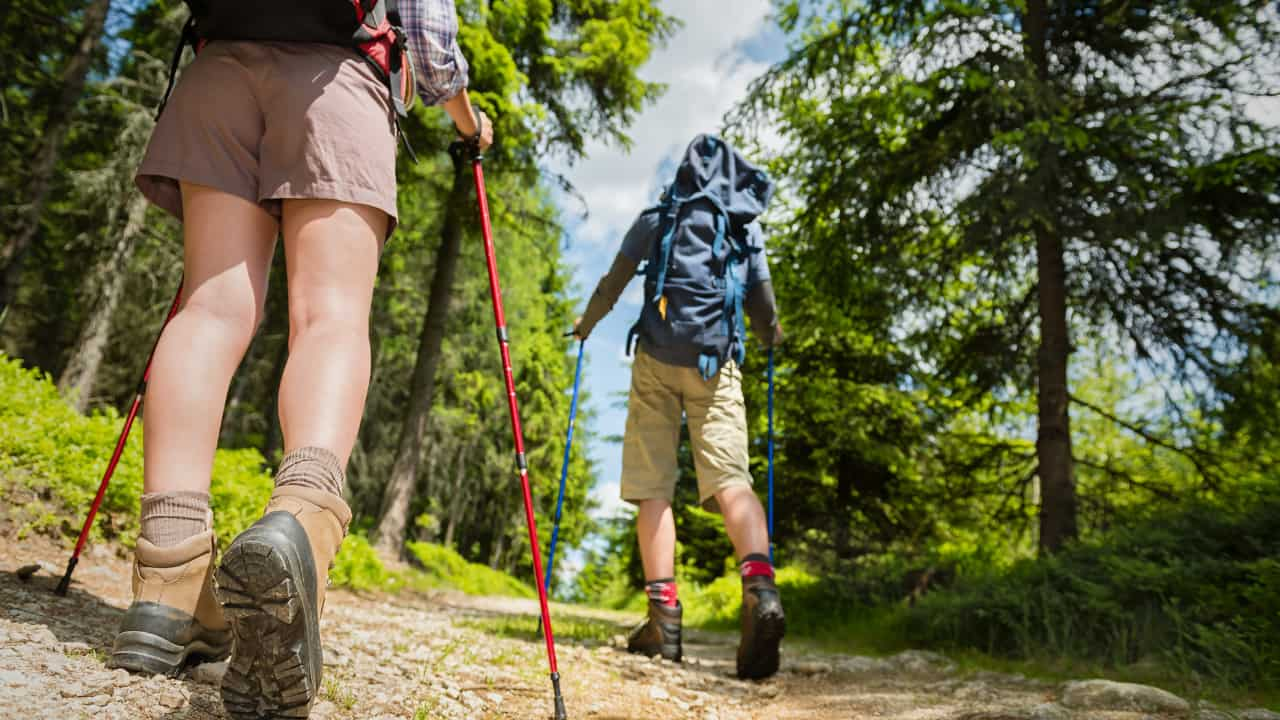
Hiking shifts the environment to natural terrain. Trails through forests, along ridgelines, across meadows, through deserts, and up mountain slopes introduce elevation change, uneven ground, and variable conditions that challenge your body in new ways. Hiking builds leg strength, improves balance, and demands more cardiovascular effort than flat walking. It also puts you in direct contact with landscapes and ecosystems that most people never experience from a car or a screen.
Both disciplines share a core philosophy: movement at a human pace, sustained over time and distance, in whatever environment is available to you. They are not competitive by nature, although there are competitive events like race walking and fastpacking if that appeals to you. For most people, walking and hiking are deeply personal practices that offer solitude, clarity, and a sense of accomplishment that is hard to replicate in a gym setting.
Hiking is also remarkably diverse. Day hiking refers to any trail outing you can complete within a single day without camping. Backpacking adds overnight camping into the equation, requiring you to carry shelter, food, and supplies in a pack. Section hiking means completing a long trail over multiple separate trips across weeks, months, or years. Thru-hiking is the practice of completing an entire long-distance trail, like the Appalachian Trail or Pacific Crest Trail, in one continuous journey. As a beginner, you will almost certainly start with day hiking, and that is where the richest foundation is built.
Starting is genuinely simple, and the most important thing you can do is resist the urge to overthink it.
The first step is to begin walking in whatever environment is immediately accessible to you. Your neighborhood, a local park, a greenway, a trail system nearby, even a large parking lot or a quiet road. You do not need to find the perfect trail or drive to a scenic location on your first outing. Just walk. Aim for 20 to 30 minutes at a comfortable pace where you can hold a conversation but feel like you are actually moving. Do this three to four times a week and you are already building the foundation.
Once walking feels comfortable and you are ready to explore natural terrain, the next step is finding local trails. The AllTrails app and website is the most widely used resource for discovering trails in your area. You can filter by difficulty, distance, elevation gain, and user ratings. Start with trails marked easy or moderate, keep your first hikes under 5 miles in distance and under 500 feet of elevation gain, and always read recent reviews from other hikers to understand current trail conditions.
Before your first hike, spend a few minutes looking at the trail map and understanding the basic route. Know how long the trail is, whether it is a loop or an out-and-back, where the trailhead parking is located, and roughly how long it should take you based on a conservative pace of about 2 miles per hour on trails with modest elevation.
Tell someone where you are going and when you plan to return. This is a basic safety habit that takes 30 seconds and matters enormously if something unexpected happens.
Arrive at the trailhead with water, a snack, your phone charged, and appropriate clothing for the weather. Start hiking. Pay attention to how your body feels, how the terrain changes, and what is around you. If you hit a point where you feel tired or uncertain, turn around. There is no shame in a shorter hike. Every experienced hiker has turned around more times than they can count.
As you gain confidence over several weeks and months, you can begin pushing your distance and elevation gradually. A good rule of thumb is to increase your weekly hiking distance by no more than 10 percent at a time to avoid overuse injuries.
How-To & Guides
How-To & Guides

Mindset & Motivation
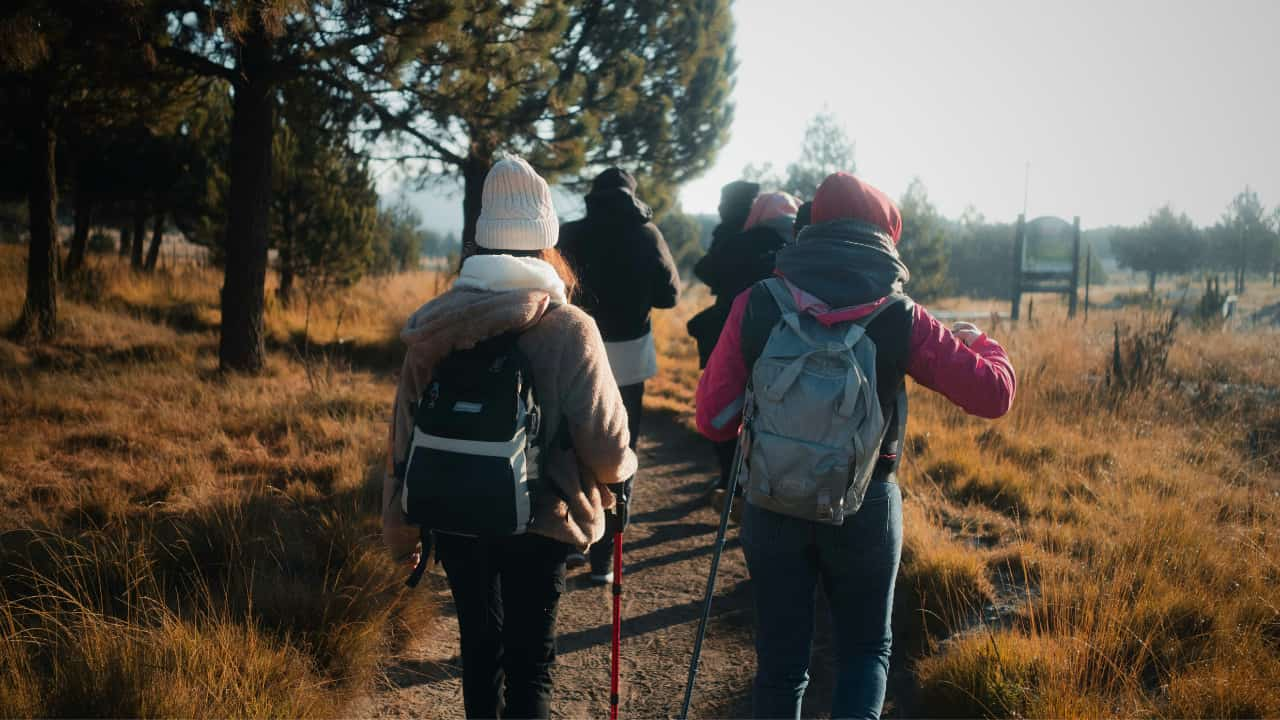
The first 90 days of walking and hiking as an intentional practice will move through a few distinct phases, and knowing what to expect makes the process much more enjoyable.
In the first two to three weeks, your body is adapting. If you have been largely sedentary, even moderate walks will leave your legs feeling tired. You may notice soreness in your calves, thighs, and glutes, especially after your first few hikes with any elevation change. Your feet may feel tender if you are not used to sustained walking on hard surfaces or uneven terrain. This is all normal. Your muscles, connective tissue, and cardiovascular system are all responding to new demands, and that response is exactly what you want. Keep your outings shorter during this phase and prioritize consistency over distance.
By weeks four through six, most beginners notice a meaningful shift. The effort required for the same walk or hike begins to feel less demanding. You recover faster between outings. Your pace naturally picks up without feeling strained. This is the adaptation phase working in your favor, and it is deeply motivating when you notice it. This is typically when people start exploring slightly longer trails, looking for new locations, and thinking about gear upgrades.
From weeks seven through twelve, you are building real trail fitness. Hikes that seemed challenging a month ago now feel comfortable. You start to develop an intuitive sense of your own pace, your hydration needs, how much food you need to carry, and how to read terrain ahead of you. Your legs are noticeably stronger. If you have been hiking with any regularity, your cardiovascular endurance has improved in ways that carry over into other areas of your life, like climbing stairs, playing with kids, or handling physically demanding days at work.
By the end of 90 days, walking and hiking will likely feel less like exercise and more like something you simply do and enjoy. You will have a short list of favorite trails, a sense of your comfortable distance range, and probably a growing curiosity about trails farther from home. Many people find themselves planning weekend trips around hiking at this point, which is one of the clearest signs that the discipline has genuinely taken hold.
A few things to watch for in your first 90 days. Blisters are common early on and almost always indicate that your footwear needs adjustment, either in the shoe itself or in your sock choice. Hot spots form before blisters do, so if you feel friction developing on your foot, stop and address it immediately rather than pushing through. Knee pain on descents is another common early complaint, often caused by stepping down too aggressively or wearing footwear without adequate support. Slowing your pace on downhills and taking smaller, more controlled steps usually resolves this. Dehydration sneak up on people more on trails than in other settings because the distraction of the environment means you forget to drink. A general guide is to drink about half a liter of water per hour of hiking in mild conditions, more in heat or at elevation.
How-To & Guides

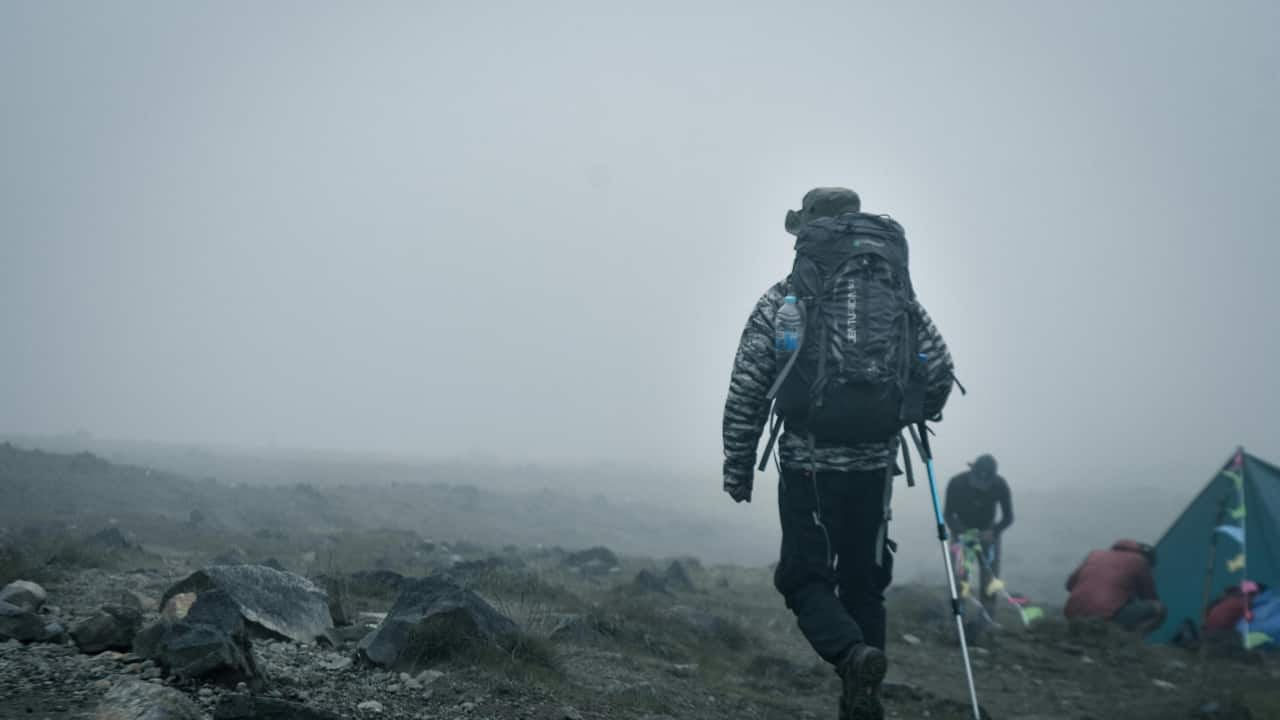
One of the best things about walking and hiking is that the barrier to entry in terms of cost is genuinely low. You do not need to spend a lot to get started, and the gear you do need is straightforward.
Footwear is the single most important investment you will make. For casual walking on paved surfaces, a supportive athletic shoe you already own is usually fine. For hiking on natural trails, a dedicated hiking shoe or boot is worth buying early. You do not need to spend a lot, but you do need something with a grippy rubber outsole, lateral support around the ankle, and a slightly stiffer midsole than a standard running shoe. Entry-level trail runners from brands like Merrell, Salomon, HOKA, and Brooks start around $80 to $130 and cover most beginner hikers well. Traditional hiking boots that are higher cut and offer more ankle support run from $100 to $200 for quality entry-level options. Avoid cheap imitations from discount stores, as the outsoles typically have poor traction and the support is inadequate for uneven terrain.
Socks matter far more than most beginners expect. Wool or synthetic moisture-wicking hiking socks dramatically reduce blister risk compared to cotton. Brands like Darn Tough, Smartwool, and Balega make excellent options in the $15 to $25 per pair range. Buy at least two to three pairs dedicated to hiking.
Clothing for walking requires nothing special beyond what you likely already own. For hiking, the key principle is to avoid cotton in any base layer when the weather is variable or cool. Cotton holds moisture, dries slowly, and in cool or wet conditions can contribute to dangerous drops in body temperature. Moisture-wicking synthetic or wool shirts, light fleece mid-layers, and a packable rain jacket are the building blocks of a functional hiking wardrobe. A basic packable rain jacket from Columbia or REI runs $60 to $100 and is one of the most useful pieces of gear you will own.
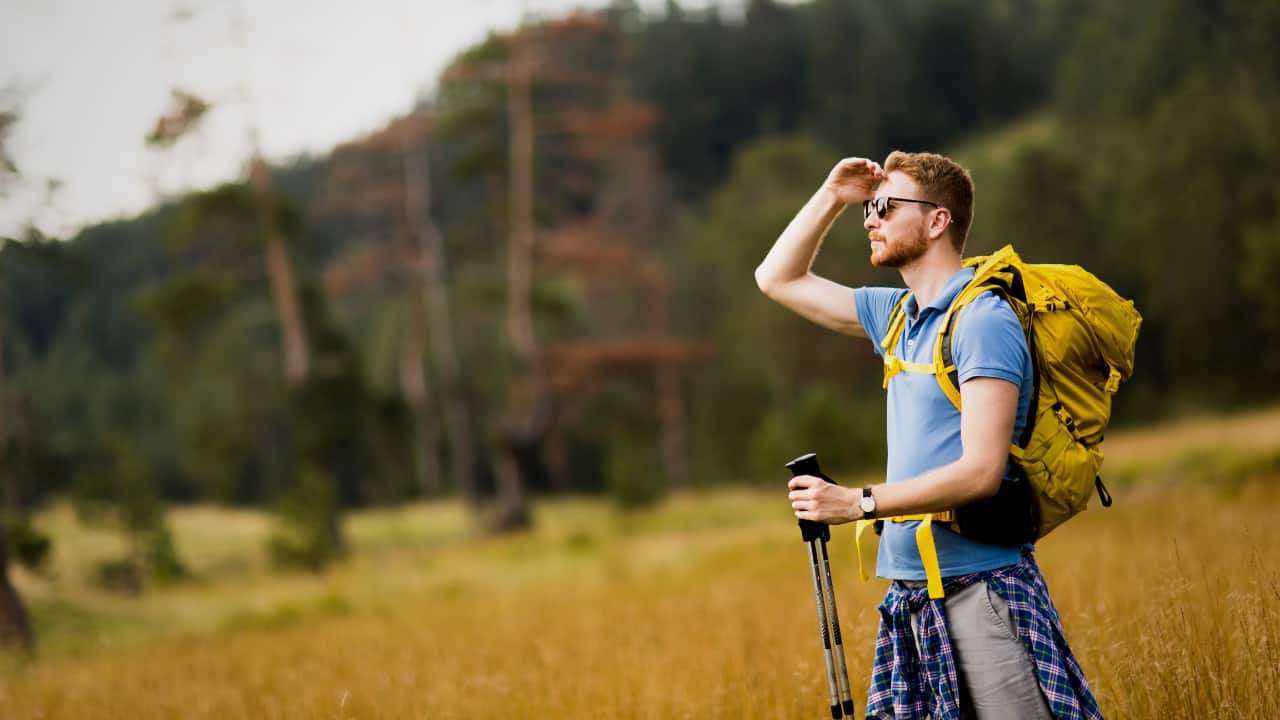
A daypack becomes important once your hikes extend beyond an hour or so. You need somewhere to carry water, snacks, extra layers, a first aid kit, and other essentials. A 15 to 25 liter daypack is the right size for most day hikes. Osprey, Gregory, and REI Co-op all make reliable entry-level daypacks in the $60 to $120 range that will last for years with basic care.
Hydration can be handled with a simple water bottle or a hydration reservoir that fits inside your pack. A basic 32-ounce Nalgene bottle costs around $12. Hydration bladders from Platypus or Osprey that hold 2 to 3 liters run $20 to $40 and are convenient because they allow you to drink while walking without stopping to pull out a bottle.
Trekking poles are optional for most beginners but genuinely useful on trails with significant elevation gain and loss, loose terrain, or river crossings. They reduce impact on your knees on descents, provide stability on uneven ground, and give your upper body a small amount of active engagement. Collapsible poles from Black Diamond and Leki start around $50 to $80 for a pair and are worth considering once you start tackling more challenging terrain.
Sun protection and bug protection round out the basics. A wide-brimmed hat, sunscreen, and insect repellent are low-cost items that prevent significant discomfort and health issues on the trail.
Total startup cost for a basic but functional hiking setup, including shoes, socks, a daypack, a water bottle, and basic clothing, lands in the range of $200 to $400 for most people buying new gear at mid-range price points. If you shop sales at REI, use their used gear program, or source some items secondhand, you can cut that significantly. Walking requires far less investment since most people already own appropriate shoes and clothing to begin immediately.
How-To & Guides

How-To & Guides
Nutrition & Fueling

Mindset & Motivation
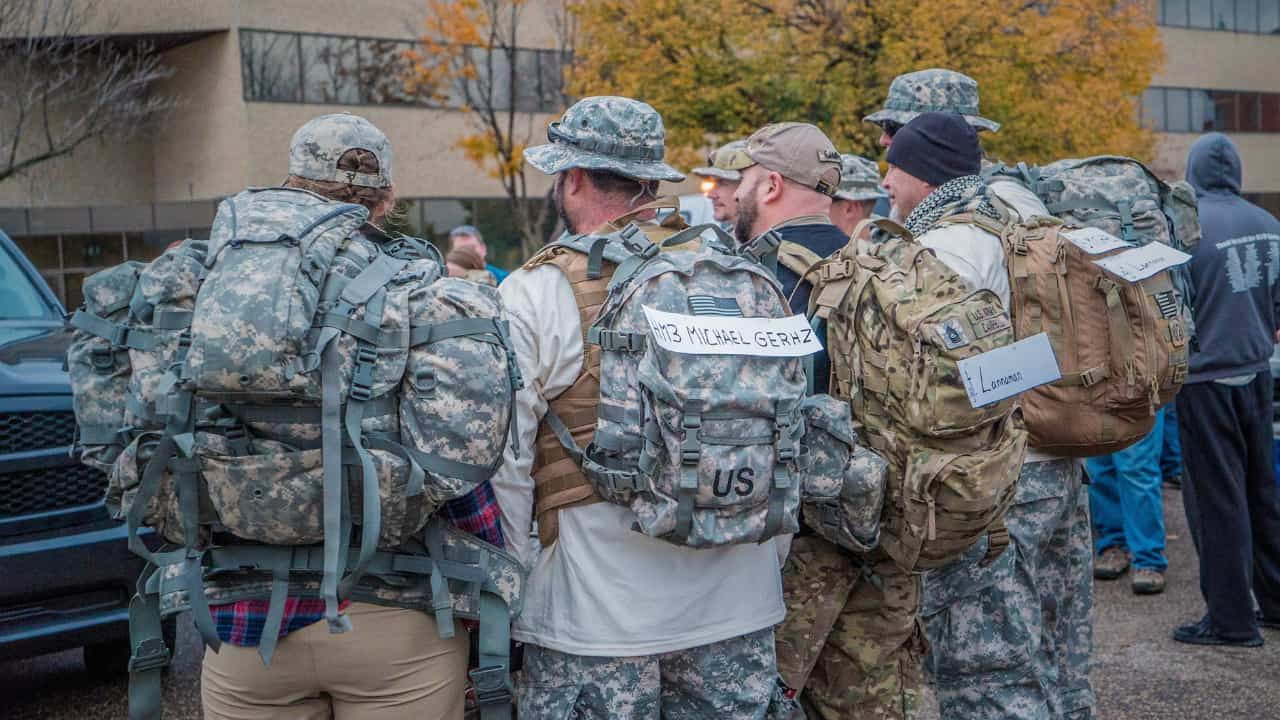
Walking and hiking reward a patient, gradual approach to progression. The temptation for enthusiastic beginners is to ramp up too quickly, take on trails that exceed their current fitness, and end up sidelined with blisters, knee pain, or exhaustion. The hikers who build deep, lasting fitness are almost always the ones who progress methodically.
Building base fitness through walking is the right starting point for anyone who is new to intentional exercise or returning after a long break. Aim for 30 to 45 minutes of brisk walking four to five days a week for the first four to six weeks before attempting any significant trail hiking. This builds the cardiovascular base and conditions your feet, ankles, and legs for the demands of uneven terrain.
Introducing trail hiking once you have a walking base means starting conservatively. Your first several hikes should be in the 3 to 5 mile range with minimal elevation gain, under 500 feet. Hike at a pace that allows you to breathe comfortably and hold a conversation. This is not a race, and moving slowly is not a weakness. Sustainable pace is what allows you to hike longer and recover faster.
Elevation gain is the primary metric that separates easy hikes from challenging ones. Distance alone is not a reliable measure of difficulty. A 6-mile hike with 2,000 feet of elevation gain is far more demanding than an 8-mile flat trail. As you progress, introduce elevation gradually. Adding 200 to 300 feet of cumulative gain per outing over several weeks is a reasonable progression for most people.
Weekly mileage can grow steadily once you are consistently hiking two to three times per week. The 10 percent rule, increasing your total weekly distance by no more than 10 percent from one week to the next, is a conservative but effective guideline that dramatically reduces injury risk.
Cross-training supports hiking fitness in ways that hiking alone cannot fully develop. Strength training for your glutes, hamstrings, quadriceps, and calves directly improves your ability to climb and descend. Single-leg exercises like step-ups, lunges, and Bulgarian split squats are particularly transferable to trail movement. Core strength improves your stability on uneven ground and reduces fatigue on long days. Swimming, cycling, and yoga complement hiking well and give your joints active recovery while maintaining cardiovascular fitness.
Navigation skills are a progression milestone that many hikers neglect until they get into trouble. Learning to read a topographic map, use a compass for basic orientation, and navigate with an app like Gaia GPS or CalTopo are skills that open up more remote and less-traveled trails while significantly improving your safety. You do not need these skills for popular, well-marked day hikes, but as your ambitions grow toward more remote terrain, they become essential.
Building toward bigger goals is one of the most motivating aspects of hiking progression. After several months of consistent hiking, many people set their sights on a specific goal, whether that is a local summit they have always seen from the highway, completing every trail in a regional park system, a multi-day backpacking trip, or eventually a section of a major long trail. These goals pull your training forward and give your outings a sense of cumulative purpose. The discipline of walking and hiking scales from a 20-minute neighborhood walk to a months-long thru-hike of thousands of miles, and every step on that spectrum builds on the one before it.